

Introduction
HDFC Bank is one of India’s major private-sector banks and an important company in the country’s financial markets. Because of its size, banking operations, retail customer base, corporate lending activities, and presence in major stock-market indexes, the company frequently receives attention from investors. Anyone researching HDFC Bank stocks should look beyond daily price movements and examine the bank’s financial performance, loan growth, deposits, margins, asset quality, capital position, management strategy, and broader economic environment. HDFC Bank publishes quarterly and annual financial results, allowing investors to study its operating performance over time. Its financial results for FY2025-26 showed net revenue of ₹1,912.2 billion and profit after tax of ₹746.7 billion, with annual profit increasing 10.9% from the previous financial year. Understanding these numbers alongside risks and market conditions provides a more complete perspective on the company’s shares.
What Are HDFC Bank Stocks?
HDFC Bank stocks represent ownership interests in HDFC Bank Limited, a major Indian banking company whose equity shares are traded on India’s stock exchanges. When an investor purchases shares, that investor becomes a shareholder in the company and participates in the potential financial gains or losses associated with the investment. The market value of the shares changes according to investor expectations, company performance, economic conditions, interest rates, banking-sector developments, and many other factors.
The phrase HDFC Bank stocks is often used broadly when discussing the company’s share price, financial performance, investment characteristics, or future business prospects. However, a stock’s market price should not be viewed independently from the company’s underlying financial performance. Investors can examine earnings, loan growth, margins, asset quality, capital adequacy, deposits, and management decisions to develop a more informed understanding of the business.
Understanding HDFC Bank’s Business
HDFC Bank operates across several major areas of banking, including retail banking, wholesale banking, commercial banking, and financial services. Its activities include accepting deposits, providing loans, offering payment services, facilitating transactions, and serving individuals, businesses, and institutions.
The scale of a large bank can provide diversification across customers and products, but it also creates exposure to a wide range of economic conditions. Consumer demand, business investment, employment, interest rates, property markets, and overall economic growth can influence banking activity. For investors studying HDFC Bank, understanding how these factors affect lending, deposits, credit quality, and profitability is important because banking businesses operate differently from companies that primarily sell physical products.
Recent Financial Performance
HDFC Bank’s financial results provide important information for analyzing its business. According to the bank’s FY2025-26 results, net revenues increased from ₹1,683.0 billion in FY2024-25 to ₹1,912.2 billion in FY2025-26. Profit after tax increased 10.9% to ₹746.7 billion. For the quarter ended March 31, 2026, net revenue reached ₹462.8 billion, while net interest income increased 3.2% year over year to ₹330.8 billion.
These figures illustrate why investors should examine multiple financial indicators rather than focusing only on the stock price. Revenue growth and profit growth can provide information about operating performance, while net interest income and margins help explain the economics of banking. Investors can also compare quarterly results with previous periods to identify whether trends are strengthening, slowing, or changing.
Importance of Net Interest Margin
Net interest margin, commonly called NIM, is an important banking metric. It broadly reflects the difference between interest earned on assets such as loans and interest paid on liabilities such as deposits, relative to the bank’s earning assets or another relevant asset base. Changes in NIM can have a significant effect on a bank’s profitability.
HDFC Bank reported a net interest margin of 3.38% on total assets and 3.53% based on interest-earning assets for the quarter ended March 31, 2026. Later in July 2026, Reuters reported that weaker-than-expected margins in the June quarter had contributed to pressure on the bank’s shares. Reuters reported a June-quarter NIM of 3.26%, compared with 3.38% reported for the March quarter. This illustrates why investors monitor margins closely when evaluating bank stocks.
Loan Growth and Deposits
Loans and deposits are fundamental components of a bank’s business model. A bank generally uses deposits as an important source of funding and earns income by lending to individuals, businesses, and other borrowers. Therefore, investors often monitor both loan growth and deposit growth when examining banking companies.
Strong loan growth can contribute to higher interest income, but rapid expansion also needs to be assessed alongside funding costs, credit quality, capital requirements, and profitability. Similarly, deposit growth is important because banks need adequate and competitively priced funding to support their lending operations. Investors analyzing HDFC Bank stocks can therefore examine the relationship between advances, deposits, margins, and overall profitability instead of looking at loan growth in isolation.
Asset Quality and Credit Risk

Asset quality is one of the most important areas when evaluating a bank. Banks face credit risk when borrowers are unable or unwilling to repay loans according to agreed terms. An increase in stressed loans can lead to higher provisions and potentially reduce profitability.
Investors can examine indicators such as gross non-performing assets, net non-performing assets, provisions, credit costs, and recoveries. These measures provide insight into the health of a bank’s loan portfolio. Asset quality can also change as economic conditions develop. A period of strong economic growth may support borrowers, while weaker economic conditions can create additional pressure for certain businesses or households.
Growth Opportunities
India’s expanding economy provides a broad environment for banking services. Increasing formal financial participation, digital payments, consumer credit, business financing, housing finance, and corporate banking can create opportunities for established financial institutions.
For HDFC Bank, growth can come from expanding its customer base, increasing digital services, developing lending relationships, and strengthening its presence across different market segments. However, growth must be considered together with profitability and risk management. Rapid expansion does not automatically produce better shareholder returns if it comes with higher funding costs, weaker margins, or increasing credit losses.
Digital Banking and Technology
Technology has become an important part of modern banking. Customers increasingly expect mobile banking, digital payments, online account services, automated customer support, and fast transaction processing. Banks therefore invest heavily in technology and digital infrastructure to improve customer experiences and operational efficiency.
For a large bank, digital technology can also help manage large numbers of transactions and customers. At the same time, technology introduces cybersecurity, privacy, system reliability, and operational risks. Investors examining HDFC Bank stocks should therefore consider both the opportunities created by digital banking and the responsibilities associated with operating large technology-driven financial systems.
Management and Leadership Changes
Management continuity and leadership succession can influence investor sentiment because senior executives play an important role in strategic decisions. In September 2026, Reuters reported that HDFC Bank had moved forward with its CEO succession process, submitting two names to the Reserve Bank of India as the bank prepared for Sashidhar Jagdishan’s term to end in late October. The report said the bank had not disclosed the candidates publicly at that time.
Leadership transitions do not automatically determine a company’s future performance. Investors can instead monitor how strategic priorities, risk management, growth plans, technology investments, and financial performance develop under new leadership.
Market Factors Affecting HDFC Bank Stocks
Bank stocks can respond to broader financial-market conditions. Interest rates, inflation, economic growth, bond yields, liquidity, credit demand, and investor sentiment can all influence banking shares. Global events can also affect Indian markets through oil prices, currency movements, foreign investment flows, and changes in expectations about monetary policy.
Recent 2026 market movements demonstrate this sensitivity. Reuters reported in September that Indian equities were affected by elevated crude-oil prices and global bond yields, while HDFC Bank was among major stocks attracting market attention. This shows why analyzing HDFC Bank stocks requires considering both company-specific developments and the broader financial environment.
Risks Investors Should Consider
Investing in bank shares involves several risks. Credit risk can affect loan portfolios, while interest-rate changes can influence margins and funding costs. Competition can also affect pricing, deposits, lending growth, and fee income. Regulatory changes may influence capital requirements, lending practices, or other aspects of banking operations.
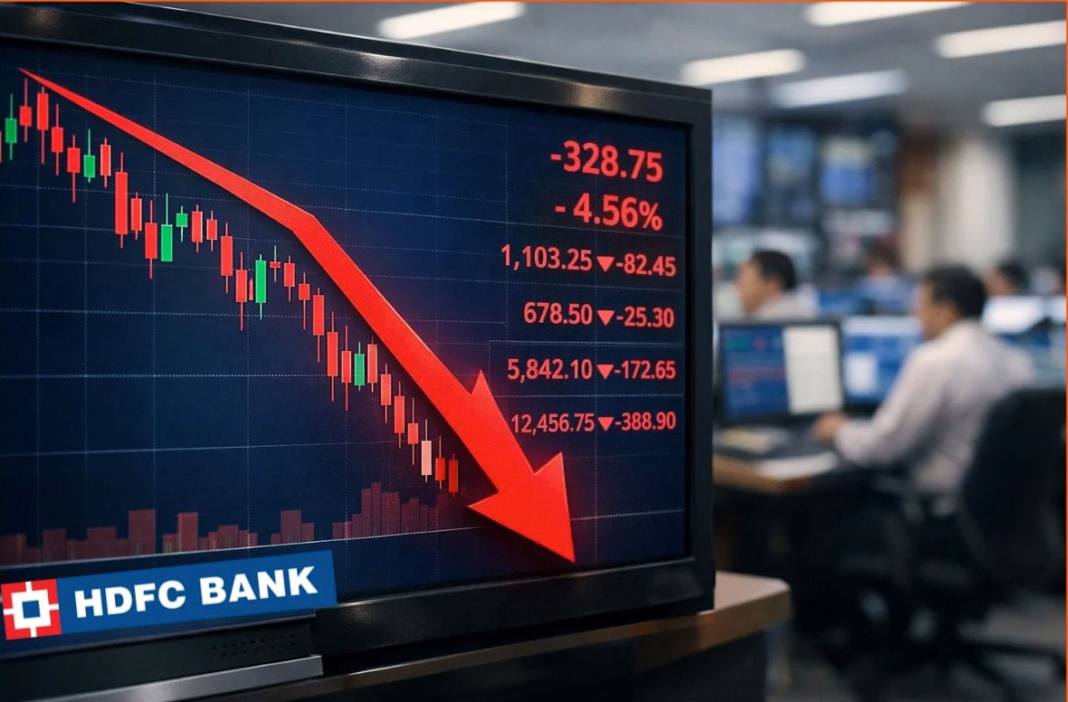
Market risk is another consideration. Even when a bank’s underlying business remains relatively stable, its stock price can decline because of changing investor expectations or broader market weakness. In August 2026, Reuters reported that HDFC Bank shares fell amid a securities lawsuit report, illustrating how company-specific news can create short-term volatility. Investors should therefore distinguish between temporary market movements and changes in underlying business fundamentals.
How Investors Can Analyze HDFC Bank Stocks
A structured analysis can include several categories. First, investors can review revenue and profit growth over multiple periods. Second, they can examine loan and deposit growth to understand the expansion of the banking business. Third, NIM and other profitability indicators can provide insight into operating efficiency. Fourth, asset-quality indicators can help investors understand credit risks.
Valuation is another important consideration. Investors can compare measures such as price-to-earnings and price-to-book ratios with historical levels and comparable banking companies. No single ratio provides a complete answer, so valuation should be considered alongside earnings quality, growth prospects, risk, capital strength, and broader market conditions.
HDFC Bank Stocks and Long-Term Investors
Long-term investors may focus more heavily on the development of the underlying business than on daily price movements. A long-term analysis can examine whether the bank continues to grow its customer base, maintain appropriate asset quality, generate sustainable profits, manage capital effectively, and adapt to changes in the financial sector.
This does not mean that a long-term holding is guaranteed to produce positive returns. Banking shares can experience substantial price fluctuations, and business conditions can change. Investors should consider their own financial objectives, risk tolerance, investment horizon, and portfolio diversification before making investment decisions.
What to Watch in Future Results
HDFC Bank’s investor-relations calendar indicates that its board is scheduled to meet on October 17, 2026, for financial results covering the quarter and half-year ended September 30, 2026. Future results can provide additional information about loan growth, deposits, margins, asset quality, profitability, provisions, and management commentary.
Investors following HDFC Bank stocks can compare each new result with previous quarters instead of reacting to one number in isolation. Looking at trends across several reporting periods can provide a broader picture of how the bank’s business is developing. It is also useful to distinguish reported financial data from market expectations, analyst opinions, and short-term price movements.
Conclusion
HDFC Bank is a major participant in India’s banking industry, making its shares an important subject for investors studying the Indian financial sector. Understanding HDFC Bank stocks requires more than watching the share price. Investors can examine profitability, net interest margin, loan and deposit growth, asset quality, capital strength, technology investments, management developments, valuation, and broader economic conditions. The bank reported FY2025-26 profit after tax of ₹746.7 billion, while recent 2026 market developments have shown that its shares can also respond to margin concerns, leadership developments, legal news, oil prices, and broader market sentiment. Because stock-market investments involve risk, readers should use current financial disclosures and consider their own circumstances before making investment decisions.