


Introduction
Semiconductors are at the center of many technologies used in modern life, from smartphones and computers to electric vehicles, cloud infrastructure, industrial equipment, and artificial intelligence systems. As demand for computing power continues to increase, the semiconductor industry has become an important area of interest for investors and businesses. Semiconductor stocks represent companies involved in different parts of this ecosystem, including chip design, manufacturing, memory, equipment, networking, testing, and electronic components.
The industry is experiencing significant changes in 2026 because artificial intelligence infrastructure is increasing demand for advanced processors, high-bandwidth memory, networking components, and sophisticated manufacturing equipment. Gartner currently forecasts worldwide semiconductor revenue of about $1.56 trillion in 2026, compared with $809 billion in 2025, while also expecting AI data-center demand to represent an increasingly large share of semiconductor revenue. These figures demonstrate the scale of the current industry expansion, while also showing why investors need to examine both opportunities and risks carefully.
What Are Semiconductor Stocks?
Semiconductor stocks are shares of publicly traded companies that participate in the semiconductor supply chain. The industry is much broader than companies that directly manufacture processors. It includes businesses that design chips, operate fabrication facilities, produce memory, manufacture semiconductor equipment, provide intellectual property, create specialized components, and offer testing or packaging services.
This diversity means that two semiconductor companies can have very different business models. A chip designer may depend heavily on demand for data centers or consumer electronics, while a semiconductor equipment company may benefit from increased investment in fabrication plants. Memory manufacturers can experience major changes in revenue and profitability when chip prices rise or fall. Understanding these differences is important when researching semiconductor stocks, because the performance of one part of the industry does not necessarily represent the entire sector.
Why Semiconductors Are Important in 2026
Artificial intelligence has become one of the strongest forces influencing semiconductor demand. Modern AI systems require powerful computing processors, high-speed memory, networking equipment, advanced packaging, and substantial data-center infrastructure. Gartner estimates that AI data-center revenue will represent 36.5% of semiconductor revenue in 2026 and could exceed 53% by 2030.
Industry research also shows that AI is affecting more than just graphics processors. CPUs, memory, networking silicon, power-management components, analog devices, and optical technologies are all becoming important parts of the expanding AI infrastructure. This creates a broader opportunity across the semiconductor supply chain. However, the same concentration creates risk because companies and investors may become overly dependent on continued AI infrastructure spending.
Major Categories of Semiconductor Companies
The semiconductor industry can generally be divided into several major categories. Fabless companies design chips but outsource manufacturing to specialized foundries. Foundries manufacture chips designed by other companies. Integrated device manufacturers combine chip design and manufacturing operations. Memory companies specialize in products such as DRAM and NAND.
There are also semiconductor equipment manufacturers that produce the sophisticated machinery required to fabricate chips. Other businesses specialize in electronic design automation software, semiconductor intellectual property, advanced packaging, testing, and materials. Investors studying semiconductor stocks should therefore examine where a company sits within this ecosystem before comparing its financial performance with another semiconductor business.
AI and Advanced Chip Demand
AI has significantly changed the semiconductor landscape. Training and running advanced AI models require large amounts of computing capacity, while data centers need increasingly sophisticated memory and networking infrastructure. High-bandwidth memory has become particularly important because it allows processors to access large amounts of data at high speeds.
Omdia reported in July 2026 that AI demand was contributing to strong semiconductor growth while creating bottlenecks involving high-bandwidth memory, advanced packaging, and manufacturing capacity. These constraints can create opportunities for companies with valuable manufacturing capabilities, but they can also increase capital requirements and operational complexity.
Investors should therefore avoid looking only at headline AI growth. It is also useful to examine whether a company can convert increased demand into sustainable revenue, cash flow, and profits.
Memory Semiconductor Opportunities
Memory is one of the most important areas of the semiconductor industry. DRAM and NAND are widely used in computers, smartphones, servers, storage systems, and AI infrastructure. Memory markets are historically cyclical, meaning prices can rise rapidly when demand exceeds supply and decline when production capacity becomes excessive.
Gartner’s August 2026 forecast projects memory revenue at approximately $837 billion for 2026 and more than $1 trillion in 2027. It also expects DRAM and NAND demand to remain influenced by expanding AI infrastructure.
This environment makes memory-related semiconductor stocks particularly sensitive to pricing cycles. Strong prices can significantly improve company revenue and margins, while oversupply can have the opposite effect. Investors therefore need to consider production capacity, inventory levels, customer demand, and long-term memory requirements rather than assuming current pricing conditions will continue indefinitely.
Semiconductor Manufacturing Equipment
Chip manufacturing requires extremely advanced equipment, and companies involved in this part of the supply chain can benefit when semiconductor manufacturers expand production capacity. Fabrication facilities require equipment for processes including lithography, deposition, etching, inspection, measurement, and packaging.
The equipment segment is closely connected to capital expenditure by chip manufacturers. When companies announce new fabs or expand existing facilities, equipment suppliers can receive significant orders. However, equipment demand can also be cyclical because manufacturers may delay investments when chip prices decline or when economic conditions weaken.
This makes equipment companies an important category to examine separately. Their financial results can sometimes reflect the health of the broader semiconductor manufacturing cycle before changes become visible in end-product demand.
Automotive and Industrial Semiconductor Demand
Artificial intelligence receives substantial attention, but semiconductor demand also comes from automotive and industrial markets. Modern vehicles contain chips for driver assistance, infotainment, power management, safety systems, connectivity, and electric-vehicle functions.
Industrial automation, robotics, renewable-energy systems, telecommunications equipment, and connected devices also depend heavily on semiconductor components. Diversification across these markets can reduce a company’s reliance on one particular demand source.
KPMG and the Global Semiconductor Alliance reported that semiconductor executives identified AI, cloud and data centers, wireless communications, and automotive as leading revenue drivers in their 2026 industry outlook. This illustrates how multiple end markets can influence the industry’s long-term development.
Valuation Matters
Strong industry growth does not automatically mean that every semiconductor company represents the same investment opportunity. Stock prices reflect expectations about future earnings, revenue growth, margins, competition, and cash flow. If expectations become extremely high, even a company reporting strong results can experience share-price volatility when its results fall short of market expectations.
Investors researching semiconductor stocks can examine valuation measures such as price-to-earnings ratios, price-to-sales ratios, free cash flow, operating margins, earnings growth, and expected future growth. Comparing these measurements with historical levels and industry peers can provide useful context.
Valuation should not be considered in isolation. A company growing much faster than its competitors may reasonably trade at a higher valuation, while a slower-growing business may require a different framework. The important point is to understand what expectations are already reflected in the share price.
Supply Chain and Geopolitical Risks
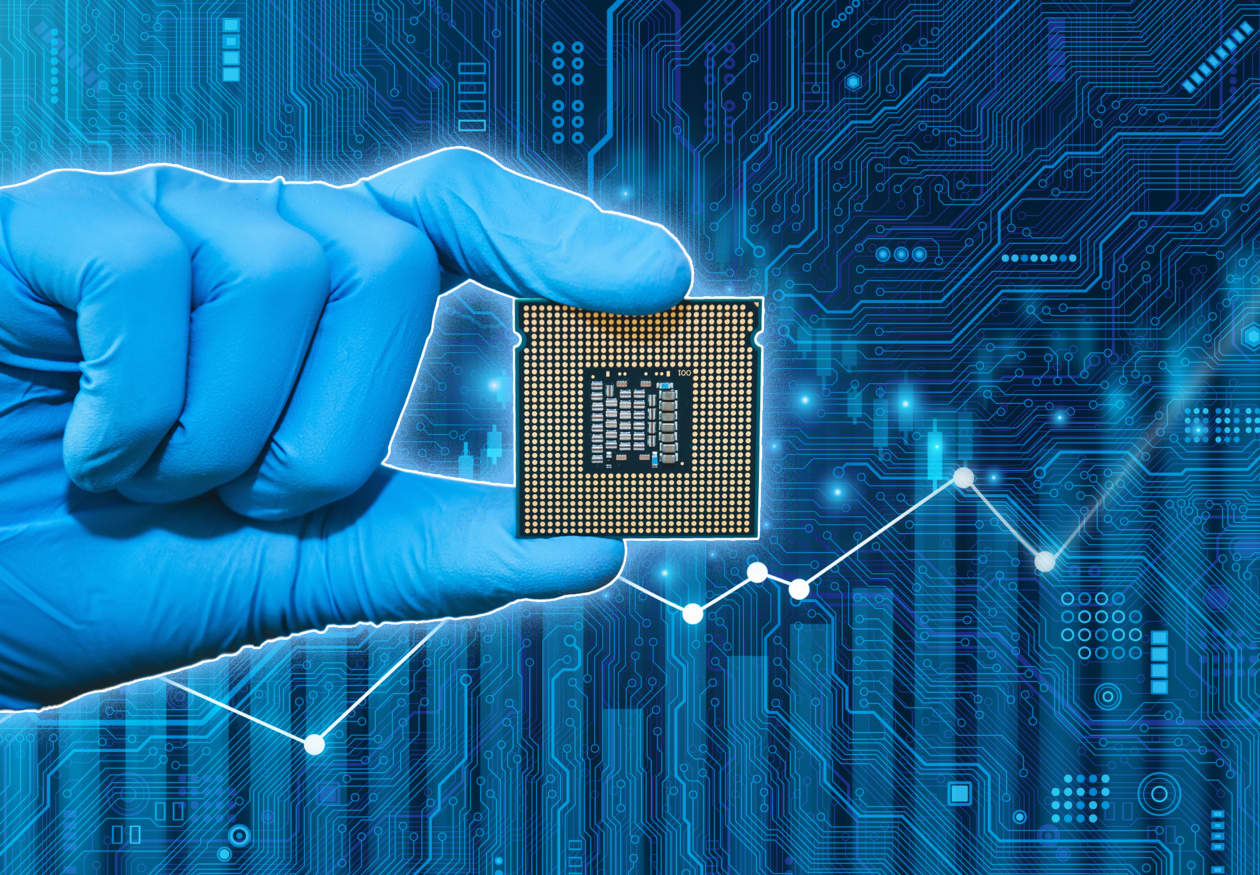
Semiconductors have one of the world’s most complex supply chains. Chip design, raw materials, equipment, manufacturing, packaging, testing, and final products can involve companies located across multiple countries. Disruptions in one region can therefore affect businesses elsewhere.
Trade policies, tariffs, export restrictions, energy availability, transportation problems, and geopolitical tensions can all influence semiconductor companies. KPMG’s 2026 industry survey found that tariffs and trade policy ranked as the top concern among surveyed semiconductor executives, while supply-chain flexibility and geographic diversification were major strategic priorities.
These factors matter when evaluating semiconductor stocks because a company can have strong technological products but still face challenges from external supply-chain conditions.
Current Semiconductor Market Environment
The semiconductor market in 2026 combines strong structural demand with considerable uncertainty. Gartner’s latest forecast expects semiconductor revenue to reach about $1.56 trillion in 2026, while other industry forecasts also anticipate substantial growth. At the same time, analysts and market participants continue to monitor whether AI infrastructure spending can remain at its current pace.
Recent market volatility illustrates this issue. Reuters reported that chipmakers including Nvidia, Micron, Broadcom, and AMD experienced significant declines in September after concerns about the pace and direction of AI development affected technology stocks. Such movements demonstrate that even companies benefiting from strong underlying demand can experience sharp changes in market valuation.
How to Research Semiconductor Companies
A structured research process can make semiconductor analysis easier. Investors can begin by understanding a company’s primary products and identifying the markets responsible for most of its revenue. The next step is examining revenue growth, gross margins, operating income, free cash flow, debt, capital expenditure, and research-and-development spending.
It is also useful to examine customer concentration. A semiconductor company heavily dependent on a small number of major customers may face greater business risk if those customers change their purchasing strategies. Production capacity, technological advantages, patents, manufacturing relationships, and competitive positioning can also influence long-term performance.
Finally, investors should distinguish between temporary industry cycles and sustainable structural growth. Semiconductor demand can increase for years, but individual product categories can still experience periods of oversupply and declining prices.
Diversification and Risk Management
The semiconductor sector can provide exposure to important technology trends, but concentrating too heavily in one industry can increase portfolio risk. Different semiconductor companies can respond differently to interest rates, economic conditions, AI investment, consumer demand, memory pricing, and manufacturing cycles.
Some investors may therefore consider broader diversification across technology, healthcare, financial services, industrial companies, consumer businesses, or diversified funds. The appropriate allocation depends on individual circumstances, risk tolerance, investment objectives, and time horizon.
Another consideration is position size. Even when the long-term industry outlook appears strong, individual companies can experience substantial price movements. Researching financial statements and maintaining a disciplined approach can help investors avoid making decisions based solely on short-term market excitement.
Future Outlook for Semiconductor Stocks
The long-term semiconductor industry outlook remains closely connected to AI, cloud computing, automation, electric vehicles, advanced communications, and the increasing digitalization of businesses. The Semiconductor Industry Association reported that global chip sales are projected to exceed $1.5 trillion in 2026, highlighting the industry’s expanding economic importance.
At the same time, the future will not necessarily be a straight upward path for every semiconductor company. New manufacturing capacity can change supply conditions, technological transitions can make existing products less competitive, and changes in AI spending can influence valuations. Increasing energy requirements for fabs and data centers are also becoming important considerations.
For investors, the most useful approach is to examine both the structural growth story and the cyclical nature of the industry. A strong company still needs sustainable financial performance, competitive technology, responsible capital allocation, and the ability to adapt as the semiconductor landscape changes.
Conclusion
Semiconductors are fundamental to modern technology, and their importance continues to increase as artificial intelligence, cloud computing, automation, connected devices, electric vehicles, and advanced computing develop. Current industry forecasts point to exceptionally strong semiconductor revenue growth in 2026, although the sector also faces supply-chain, geopolitical, valuation, capacity, and demand-related risks.
For anyone researching semiconductor stocks, understanding the complete industry is more useful than focusing on a single popular company or short-term price movement. Chip designers, manufacturers, memory producers, equipment suppliers, and specialized semiconductor businesses all operate under different economic conditions. Evaluating business quality, growth drivers, valuation, financial strength, competitive advantages, and industry cycles can provide a more complete picture. As the semiconductor ecosystem continues to evolve, informed research and careful risk management remain important for understanding this rapidly changing sector.