


Introduction
Amazon has developed from an online bookstore into one of the world’s largest technology and commerce companies. Its business now covers online retail, cloud computing, digital advertising, subscriptions, logistics, entertainment, artificial intelligence, and other technology services. Because of this broad business model, Amazon has attracted significant attention from investors who want exposure to both consumer spending and technology growth. Understanding amazon stocks requires looking beyond the company’s shopping platform and examining the different businesses that contribute to its financial performance.
Amazon’s stock is publicly traded under the ticker symbol AMZN. Like other large publicly traded companies, its share price can move because of earnings results, economic conditions, investor expectations, interest rates, competition, technological developments, and changes in consumer behavior. Investors considering the company should therefore examine both its opportunities and risks instead of focusing only on short-term price movements.
What Are Amazon Stocks?
The term amazon stocks generally refers to shares of Amazon.com, Inc. that trade on the stock market under the ticker symbol AMZN. Buying a share represents ownership in the company, although the percentage represented by a single share is very small because Amazon has a large number of shares outstanding.
Amazon’s business is much broader than traditional retail. Its revenue comes from several areas, including online stores, physical stores, third-party seller services, subscriptions, advertising, and Amazon Web Services. This diversified structure means that the company’s performance cannot be understood by looking only at retail sales.
For investors, Amazon is particularly interesting because some of its businesses operate with different economic characteristics. Retail depends heavily on merchandise sales, fulfillment efficiency, and customer demand, while cloud computing and advertising can generate different margins and growth patterns. Examining these individual segments can provide a clearer picture of the company.
How Amazon Makes Money
Amazon operates a large and complicated business ecosystem. Its retail operations allow customers to purchase millions of products, while third-party sellers use Amazon’s marketplace and fulfillment infrastructure to reach consumers. Amazon also earns fees from sellers for services such as commissions, fulfillment, storage, and advertising.
Another major part of the business is cloud computing. Amazon Web Services, commonly known as AWS, provides computing power, storage, databases, artificial intelligence services, analytics, and other infrastructure to businesses and organizations. The cloud division has become an important contributor to Amazon’s overall financial performance.
Advertising is another increasingly important business. Brands and sellers can advertise products across Amazon’s platforms, allowing the company to generate revenue from commercial activity beyond the initial product sale. Subscription services such as Prime also contribute recurring revenue and strengthen customer relationships.
Why Investors Follow Amazon
Many investors follow Amazon because the company operates across several large and growing markets. E-commerce remains an important part of the business, while cloud computing, advertising, artificial intelligence, logistics, and digital services provide additional opportunities.
The company’s large customer base can also create advantages. When more customers use Amazon’s ecosystem, the company has opportunities to sell products, subscriptions, advertising services, and other offerings to those users. This creates connections between different parts of the business.
At the same time, investors need to distinguish between business potential and stock performance. A successful company does not automatically mean its shares will rise continuously. The price investors pay for a stock matters because expectations about future growth may already be reflected in the market valuation.
Amazon and AWS
Amazon Web Services is one of the most important businesses to understand when researching amazon stocks. AWS provides cloud infrastructure and technology services to companies ranging from small businesses to large enterprises and government organizations.
Cloud computing has become an essential part of modern digital infrastructure. Businesses use cloud services for applications, data storage, machine learning, websites, databases, analytics, and other technology requirements. As organizations increase their use of artificial intelligence, demand for computing infrastructure can also become an important factor.
However, AWS faces competition from other major cloud providers. Investors should therefore consider growth rates, operating margins, capital expenditure, customer demand, technological developments, and competitive conditions when evaluating the cloud business.
The Role of Artificial Intelligence
Artificial intelligence has become an important area for Amazon’s future business strategy. AI can influence several parts of the company, including AWS cloud services, advertising, shopping recommendations, logistics, customer service, and internal operations.
For AWS, AI creates opportunities to provide businesses with computing resources, specialized chips, machine-learning tools, and other infrastructure. Amazon can potentially benefit when companies increase spending on AI-related technology.
However, AI also requires substantial investment. Data centers, networking equipment, specialized processors, energy infrastructure, and research can require significant capital. Investors should therefore consider both the potential revenue opportunities and the costs associated with building AI infrastructure.
Amazon’s Advertising Business
Amazon’s advertising operation has become an important part of its broader business model. Sellers and brands can promote products to consumers who are already using Amazon to research or purchase items.
This creates an interesting advertising environment because Amazon has access to shopping-related information and customer interactions. Advertising can also complement retail because sellers may spend more to increase product visibility and sales.
For investors analyzing amazon stocks, advertising growth is worth watching because the business can have different economics from physical product sales. Revenue from advertising does not require Amazon to purchase and ship the advertised product in the same way as a traditional retail transaction.
E-Commerce and Consumer Demand
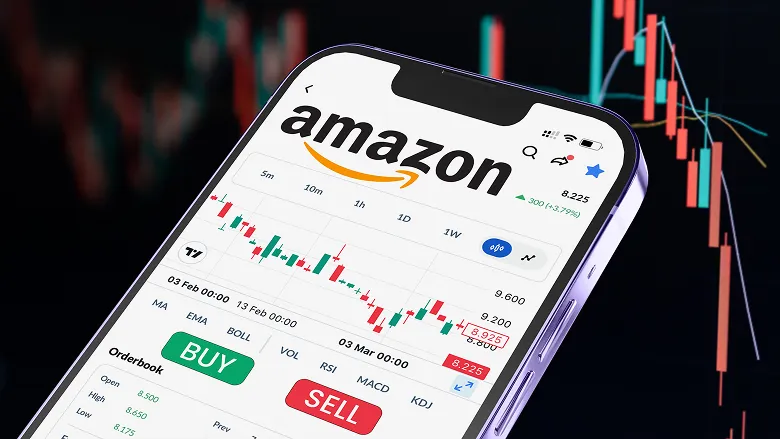
Amazon’s retail business remains central to the company’s identity. Millions of customers use its platform for products ranging from household essentials and electronics to clothing and groceries.
Consumer demand is influenced by employment, wages, inflation, interest rates, household confidence, and broader economic conditions. During periods when consumers become more cautious, discretionary spending may slow. On the other hand, strong consumer activity can support higher sales.
Amazon’s large logistics network is another important factor. Faster delivery can improve customer convenience, but maintaining warehouses, transportation networks, employees, technology, and delivery infrastructure can also create significant operating costs.
Factors That Can Affect Amazon Stocks
Several factors can influence the performance of amazon stocks. Company earnings are among the most important because investors use financial results to evaluate whether Amazon is meeting expectations.
Revenue growth, operating income, free cash flow, AWS performance, advertising growth, retail margins, and capital spending can all affect how investors view the company. Management’s guidance can also influence expectations about future results.
Macroeconomic conditions matter as well. Changes in interest rates can affect the valuation of growth-oriented companies. Inflation can increase operating expenses, while changes in consumer spending can affect retail demand. Currency movements can also influence international financial results.
Competition is another consideration. Amazon competes with retailers, marketplaces, cloud providers, advertising platforms, entertainment companies, logistics providers, and technology businesses.
Understanding Amazon’s Valuation
A company can have excellent businesses and still require careful valuation analysis. Investors should consider whether the current share price reasonably reflects expected future earnings and cash flows.
Common valuation measures include the price-to-earnings ratio, price-to-sales ratio, enterprise-value-based measures, operating margins, earnings growth, and free cash flow. No single metric provides a complete picture.
Growth companies often trade at higher valuations because investors expect stronger future expansion. However, higher expectations can also increase sensitivity to disappointing results. If growth slows more than expected, investors may reassess what the company is worth.
Therefore, researching Amazon involves comparing its valuation with its expected growth, profitability, competitive advantages, investment requirements, and broader market conditions.
Risks Associated With Amazon
Like any individual stock, Amazon carries investment risk. One major risk is competition. Other companies continue to invest heavily in online commerce, cloud computing, advertising, artificial intelligence, logistics, and digital services.
Regulation can also affect the company’s operations. Large technology and commerce companies may face scrutiny involving competition, consumer protection, data practices, employment, taxation, and marketplace policies.
Another risk comes from capital spending. Amazon invests heavily in warehouses, transportation infrastructure, data centers, technology, and other assets. These investments can support future growth but may reduce free cash flow in periods of heavy spending.
Economic downturns are another consideration. A weaker economy can affect consumer purchases and business technology budgets, potentially influencing multiple Amazon segments at the same time.
Amazon Stocks and Long-Term Investing
Investors considering amazon stocks should decide whether the company fits their individual investment objectives, risk tolerance, and time horizon. A long-term investor may focus more heavily on the company’s ability to grow revenue, expand margins, generate cash, and strengthen its competitive position over many years.
Short-term investors may focus more on earnings announcements, market sentiment, economic data, analyst expectations, or changes in the stock price. These approaches can have very different risk characteristics.
Long-term analysis generally benefits from looking at several years of financial results rather than relying on one quarter. Investors can examine how revenue has developed, whether profitability is improving, how much the company spends on infrastructure, and whether new businesses are becoming meaningful contributors.
What Investors Should Research Before Buying
Before purchasing shares, investors can research Amazon’s financial statements, earnings reports, business segments, competitive environment, valuation, and management commentary. It is also useful to understand the difference between revenue growth and profitable growth.
An investor should consider how much of the company’s future performance depends on assumptions about cloud computing, artificial intelligence, advertising, retail, or other businesses. The more optimistic the assumptions, the more important it becomes to evaluate whether those expectations are realistic.
Diversification is another important consideration. Holding one company’s stock exposes an investor to company-specific risks. A diversified portfolio can spread exposure across different companies, industries, asset classes, and geographic markets.
Amazon’s Future Growth Opportunities
Amazon has several areas that could influence its long-term development. Cloud computing remains important as businesses continue adopting digital infrastructure. Artificial intelligence could create additional demand for computing, software, and specialized hardware.
Advertising also provides room for continued expansion as brands increasingly seek access to consumers during the shopping process. Healthcare, logistics, entertainment, grocery services, and other businesses could provide additional opportunities.
However, future opportunities are not guaranteed outcomes. Each business requires investment, execution, and customer adoption. Investors should therefore evaluate both the potential size of an opportunity and the resources required to pursue it.
Is Amazon a Stock to Watch?
For people researching large technology and consumer companies, amazon stocks can be an important company to study because of its combination of retail, cloud computing, advertising, subscriptions, logistics, and technology.
The key question is not simply whether Amazon is a successful company. Investors also need to consider valuation, future growth expectations, profitability, capital expenditure, competition, and economic conditions.
Following quarterly results and longer-term financial trends can help investors understand whether the company’s actual performance is developing in line with market expectations. A disciplined approach can be more useful than making decisions based only on short-term headlines.
Conclusion
Amazon has become a diversified technology and commerce company with businesses spanning e-commerce, cloud computing, advertising, subscriptions, logistics, and artificial intelligence. This broad structure is one reason amazon stocks receive significant attention from investors around the world.
Understanding the stock requires more than watching its share price. Investors should study Amazon’s revenue sources, AWS performance, advertising growth, retail operations, capital spending, profitability, valuation, competitive environment, and major business risks.
Amazon’s future will depend on how effectively it balances growth with profitability while continuing to invest in technology and infrastructure. Anyone considering the stock should conduct independent research and consider personal financial goals, risk tolerance, and portfolio diversification before making an investment decision. This article is for educational purposes and is not personalized financial advice.