

Introduction
Quantum computing has moved from a highly specialized research field toward a developing commercial technology with potential applications across finance, healthcare, cybersecurity, logistics, chemistry, artificial intelligence, and scientific research. As companies work to improve quantum hardware, software, error correction, and cloud access, investors have increasingly started following the businesses connected to the industry. This has made quantum computing stocks an emerging technology theme in the financial markets. However, the sector is still developing, and different companies are pursuing very different technical approaches. Some focus directly on quantum processors, while others provide cloud infrastructure, software, semiconductor technology, networking, or research capabilities. Understanding these differences is important before evaluating companies associated with the quantum computing industry.
What Is Quantum Computing?
Quantum computing is a form of computation that uses quantum-mechanical properties to process information. Traditional computers use bits that represent information primarily as zeros or ones. Quantum computers use quantum bits, commonly called qubits, which can exploit properties such as superposition and entanglement.
The objective is not simply to create a faster version of an ordinary computer. Instead, quantum computers are designed to solve particular classes of problems that can be extremely difficult for classical systems. Potential applications include optimization, molecular simulation, materials research, cryptography, and certain machine-learning problems.
The technology remains at an early stage. Researchers and companies are still working to improve qubit quality, scale systems, reduce errors, and develop commercially useful applications. These technical challenges directly affect the outlook for quantum computing stocks.
Why Quantum Computing Is Attracting Investors
Investor interest has increased because quantum computing could eventually create new computing capabilities that are difficult or impractical to achieve with conventional machines. Technology companies, governments, universities, and specialized startups are investing in research and development.
The investment opportunity is also broader than quantum hardware alone. The emerging ecosystem includes processors, cryogenic systems, control electronics, photonics, semiconductor manufacturing, software, algorithms, cloud services, and cybersecurity.
Recent industry coverage indicates that several hardware approaches remain in active development, including superconducting, trapped-ion, photonic, neutral-atom, silicon-spin, and quantum-annealing technologies. No single architecture has established universal dominance.
Pure-Play Quantum Computing Companies
Pure-play companies focus primarily on quantum technologies rather than treating quantum computing as one small component of a much larger business. Publicly traded examples include IonQ, Rigetti Computing, D-Wave Quantum, and Quantum Computing Inc.
These businesses can provide investors with relatively direct exposure to the development of quantum technology. However, direct exposure also brings substantial risk because many pure-play companies are still developing their commercial models and investing heavily in research and expansion.
Recent financial reporting has highlighted strong revenue growth at some pure-play companies, but also significant volatility and continued questions about commercialization and profitability.
Large Technology Companies and Quantum Computing
Quantum computing is not limited to small specialized companies. Large technology businesses such as IBM, Microsoft, Alphabet, Amazon, and NVIDIA are also developing quantum-related technologies, services, or infrastructure.
IBM has built a major quantum-computing research and cloud-access ecosystem. Microsoft is developing its own quantum strategy and software environment. Alphabet has conducted research into quantum processors and error correction. Amazon provides quantum computing access through its cloud platform, while NVIDIA is developing tools for hybrid classical-quantum computing.
This creates an important distinction for investors. A large technology company may provide quantum exposure without depending entirely on the technology becoming commercially successful in the near term.
Understanding Different Quantum Technologies
One of the most important aspects of quantum computing stocks is recognizing that companies may use completely different technical architectures.
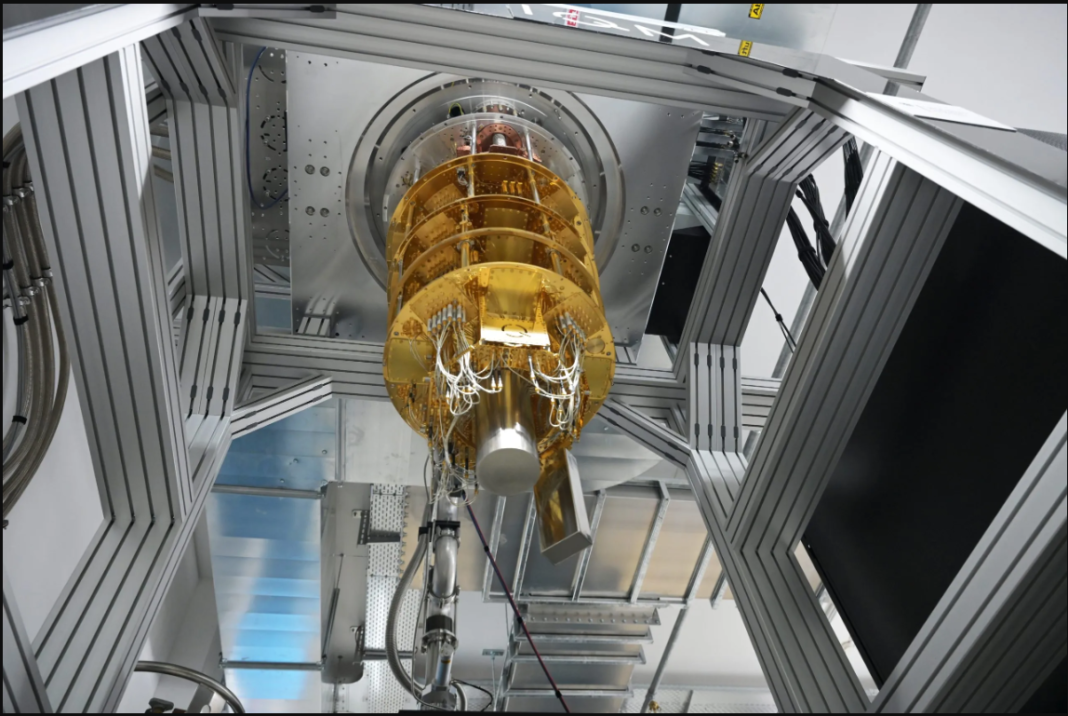
Superconducting quantum computers use specialized circuits operating at extremely low temperatures. Trapped-ion systems use electrically charged atoms controlled by electromagnetic fields. Neutral-atom approaches use laser systems to manipulate atoms, while photonic approaches use particles of light.
D-Wave has developed quantum-annealing systems designed for optimization problems rather than following exactly the same approach as universal gate-based quantum computers. This diversity means that investors should understand the underlying technology before comparing companies.
There is currently no simple equivalent of comparing two conventional semiconductor companies based solely on processor speed. Quantum systems can differ substantially in architecture, performance measurements, error rates, connectivity, and intended applications.
Quantum Computing and Cloud Services
Cloud computing could play an important role in the commercialization of quantum technology. Instead of requiring every organization to purchase and operate a quantum computer, cloud platforms can provide remote access to quantum processors.
This model can allow researchers, universities, businesses, and developers to experiment with quantum systems without building specialized infrastructure themselves.
Large cloud providers have therefore become important participants in the quantum ecosystem. Cloud access can also help developers build software and algorithms before quantum hardware becomes broadly available.
For investors studying quantum computing stocks, cloud integration is an important factor because future commercial adoption may depend as much on accessibility and software ecosystems as on the physical quantum processor.
Commercialization Remains a Major Challenge
Quantum computing has significant theoretical potential, but turning that potential into sustainable commercial revenue remains challenging. Quantum processors can be highly sensitive to environmental interference, and maintaining reliable quantum states is technically difficult.
Error correction is another major issue. Useful large-scale quantum computing will likely require sophisticated error-correction techniques because physical qubits are susceptible to errors.
This creates uncertainty around timelines. Companies may announce technical milestones well before those developments translate into substantial recurring revenue. Investors should therefore distinguish between scientific progress, product development, customer experimentation, and large-scale commercial adoption.
Revenue and Profitability Matter
When analyzing quantum computing stocks, investors should examine actual financial results rather than relying solely on technological announcements.
Important measures can include revenue growth, operating expenses, cash balances, research-and-development spending, capital expenditure, free cash flow, customer bookings, and backlog. These indicators can help investors understand whether a company’s technology is beginning to translate into commercial activity.
A company can make impressive scientific progress while still generating limited revenue. Conversely, a business with a broader technology portfolio may generate significant revenue from other operations while its quantum division remains in an early stage.
Financial statements therefore provide important context for interpreting technological developments.
Government Support and the Quantum Industry
Government investment is another factor influencing the quantum sector. Governments around the world view quantum computing as strategically important for science, cybersecurity, national technology infrastructure, and industrial competitiveness.
In 2026, U.S. government funding initiatives have attracted substantial attention from investors and technology companies. Industry reporting has described a $2 billion government funding initiative associated with quantum technology.
Government support can accelerate research and infrastructure development, but investors should not automatically assume that funding guarantees commercial success for individual companies. Government programs can support an entire ecosystem while different businesses compete to develop viable technologies.
The Importance of Quantum Software
:max_bytes(150000):strip_icc()/GettyImages-2187725520-92f104cd0fa64e3089451bff09a17bcc.jpg)
Hardware is only one part of quantum computing. Software developers are working on programming languages, compilers, algorithms, development tools, simulation environments, and applications.
Quantum software can also connect classical computers with quantum processors. This hybrid model is particularly important because many practical computing systems are likely to use classical and quantum resources together rather than replacing conventional computers completely.
Recent developments illustrate this direction. France’s CEA and quantum startup Alice & Bob announced work on software intended to integrate quantum processors with classical supercomputers, demonstrating the industry’s interest in hybrid computing environments.
Quantum Computing and Artificial Intelligence
Artificial intelligence and quantum computing are increasingly discussed together, although their relationship is still developing. Quantum computers could eventually assist with particular optimization, simulation, or machine-learning tasks, while AI can help researchers design algorithms, optimize hardware control, and analyze complex scientific data.
At the same time, quantum computing does not automatically replace GPUs or conventional AI infrastructure. Classical computing remains essential for many workloads.
Companies such as NVIDIA are developing infrastructure designed to connect classical accelerated computing with quantum systems. This creates another potential investment theme around the supporting infrastructure rather than only quantum processors themselves.
Risks Associated With Quantum Computing Stocks
The risks surrounding quantum computing stocks can be considerably higher than those associated with mature technology companies. One major risk is technological uncertainty. Researchers have not yet established one universally dominant quantum architecture.
Another risk is commercialization. A company may develop impressive technology but struggle to generate enough revenue to support its long-term expenses.
Valuation is also important. When investor enthusiasm becomes strong, share prices can move rapidly based on expectations of future technological breakthroughs. If progress takes longer than expected, valuations can change substantially.
Recent market reporting has described significant volatility among pure-play quantum companies as investors have increasingly demanded evidence that technological progress can translate into commercial revenue.
How Investors Can Research the Sector
A structured research process can make the quantum sector easier to understand. Investors can begin by identifying what each company actually does and which quantum architecture it uses.
The next step is to examine financial statements and operating results. Revenue growth, cash reserves, expenses, customer agreements, bookings, and capital requirements can provide insight into financial strength.
Investors should also examine technical milestones carefully. A larger qubit count alone does not necessarily mean that one quantum computer is more commercially useful than another. Error rates, coherence, connectivity, error correction, algorithmic performance, and practical applications can all matter.
Finally, investors can compare the company’s valuation with realistic expectations for future growth.
Quantum Computing ETFs and Diversification
Some investors may prefer diversified exposure rather than selecting individual quantum companies. Exchange-traded funds can provide exposure to multiple businesses connected with quantum computing and related technologies.
A diversified approach can reduce the effect of a single company’s technical or financial setbacks. However, an ETF does not eliminate investment risk. Its performance can still be affected by the overall technology sector, valuation levels, market sentiment, and the development of quantum computing.
Investors should review an ETF’s holdings, expense ratio, methodology, geographic exposure, and concentration before considering it.
Recent Developments in the Quantum Market
The quantum industry has continued to expand in 2026, with new public companies and partnerships increasing the number of ways investors can gain exposure to the sector.
Pasqal, a neutral-atom quantum computing company, began trading on Nasdaq in August 2026 following its business combination, giving public-market investors another company associated with quantum computing. Reuters reported that the stock initially rose sharply during its debut before ending the session with a smaller gain.
This illustrates how quickly the publicly traded quantum landscape is changing. New listings can increase investor access, but they can also introduce additional volatility as markets determine how to value early-stage quantum businesses.
What to Watch in the Future
Future developments in quantum computing stocks will likely depend on several measurable milestones. Investors can watch for improvements in error correction, useful logical qubits, system reliability, commercial customer adoption, recurring revenue, and successful real-world applications.
The development of quantum software and hybrid computing will also be important. If businesses can demonstrate measurable advantages over classical computing for specific problems, commercial adoption could accelerate.
However, timelines remain uncertain. Different technical approaches may progress at different speeds, and some approaches may ultimately prove more commercially practical than others.
Building a Balanced View
Quantum computing represents a potentially important technological development, but investment analysis should distinguish possibility from proven business performance. The industry’s long-term opportunity can be substantial while individual companies still face significant financial and technical uncertainty.
Investors can therefore consider several layers of exposure, including pure-play quantum companies, diversified technology companies, semiconductor businesses, cloud providers, software companies, and specialized ETFs.
Rather than focusing solely on headlines about breakthroughs or sudden stock-price movements, investors can examine whether technological advances are producing measurable improvements in commercial activity.
Conclusion
Quantum computing stocks represent an emerging investment theme connected to one of the most closely watched technologies in modern computing. The sector includes specialized quantum companies as well as major technology businesses working on processors, cloud access, software, networking, and hybrid computing infrastructure.
The opportunity is significant, but so are the uncertainties. Quantum hardware remains technically challenging, commercial applications are still developing, and stock valuations can respond strongly to expectations about future breakthroughs. Different companies are also pursuing different architectures, meaning that the industry cannot be evaluated using one simple metric.
For anyone researching quantum computing stocks, the most useful approach is to combine technology research with financial analysis. Understanding revenue, cash flow, research spending, customer adoption, valuation, technical milestones, and competitive positioning can provide a more complete picture than following stock-price movements alone. As the industry develops, separating genuine commercial progress from speculation will remain an important part of understanding this rapidly evolving market.