

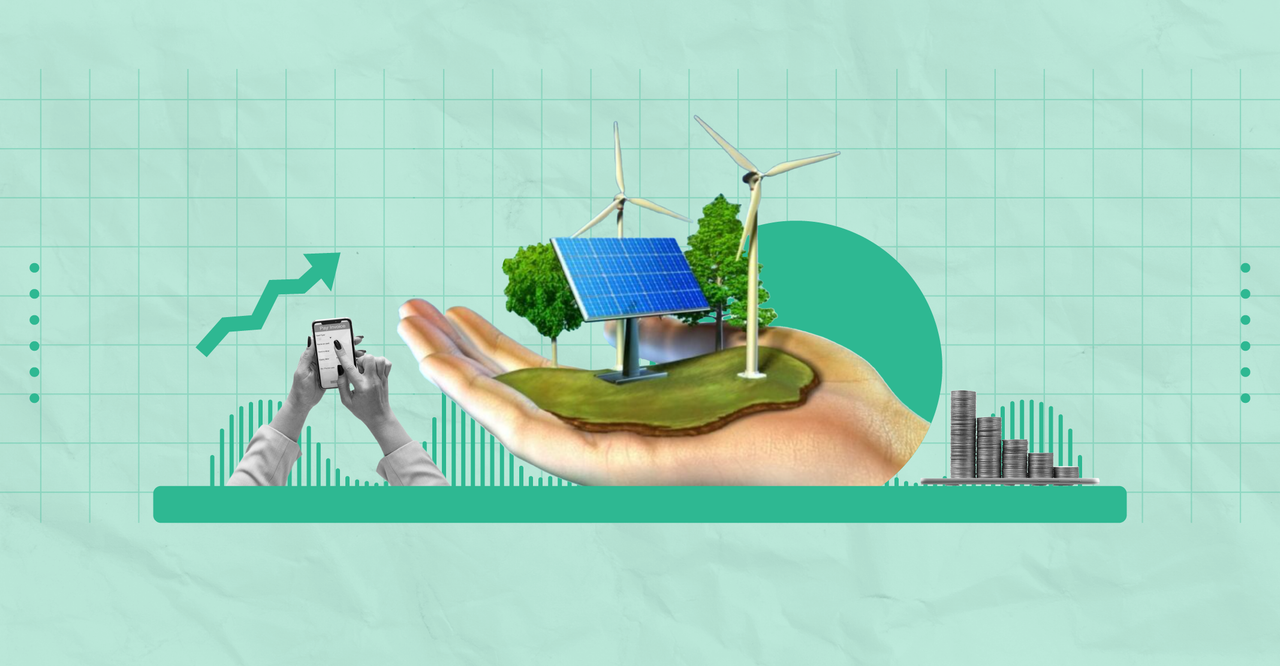
The transition toward cleaner power is creating new opportunities across the global energy industry. Solar panels, wind turbines, electric vehicles, battery storage, and modern electricity networks are becoming increasingly important as governments and businesses seek more sustainable ways to meet their energy needs. For investors, green energy stocks offer a way to participate in this changing market while learning about the companies developing renewable energy technologies.
However, investing in the clean energy sector requires more than identifying businesses associated with sustainability. Companies differ in profitability, financial strength, technology, and exposure to government policies. Some operate established electricity projects, while others depend on emerging technologies that may take years to become commercially successful. Understanding these differences can help investors make informed decisions instead of following market excitement.
What Are Green Energy Stocks?
Green energy stocks are shares of publicly traded companies involved in producing renewable electricity, developing clean energy technology, improving energy efficiency, or supporting the transition away from conventional fossil fuels. Their activities may include manufacturing solar modules, operating wind farms, producing batteries, and building equipment used in modern electricity systems.
These companies participate in different parts of the energy supply chain. Some generate electricity and sell it to utilities or commercial customers. Others manufacture components, provide engineering services, or develop software that helps manage electricity consumption.
The sector also includes businesses involved in energy storage, charging infrastructure, and grid modernization. These activities matter because renewable power generation depends on reliable transmission networks and technologies that can balance electricity supply with demand.
Investors should remember that a company’s environmental focus does not automatically make its shares attractive. A business can contribute to cleaner energy while still facing high operating costs, excessive debt, weak demand, or disappointing earnings.
Why the Renewable Energy Industry Is Attracting Attention
The growing interest in renewable energy comes from several long-term developments. Governments are introducing policies to reduce emissions, businesses are exploring cleaner electricity sources, and consumers are becoming more interested in energy efficiency.
Electricity demand is also changing as transportation, heating, manufacturing, and digital infrastructure become more dependent on electricity. Data centers and other energy-intensive facilities can increase the need for reliable power, creating opportunities for renewable generation alongside other energy sources.
Technology improvements are another important factor. Advances in solar manufacturing, battery chemistry, turbine design, and energy management systems can improve efficiency and reduce costs over time.
Nevertheless, industry growth does not guarantee strong investment returns. Share prices reflect expectations about future earnings, and investors may pay too much for a company even when its underlying industry is expanding.
Major Types of Green Energy Investments
The renewable energy market includes several business categories, each with a different financial profile.
Solar Energy Companies
Solar businesses manufacture photovoltaic panels, produce inverters, develop solar farms, or install rooftop systems. Their performance depends on equipment prices, project demand, manufacturing costs, and access to financing.
Established manufacturers may benefit from large-scale production, but intense competition can reduce selling prices and profit margins. Project developers may have different risks, including construction delays, land acquisition costs, and uncertainty about electricity purchase agreements.
Wind Power Businesses
Wind energy companies develop offshore and onshore wind farms, manufacture turbines, or supply maintenance services. Long-term electricity contracts can provide predictable revenue, although projects often require substantial upfront investment.
Investors should examine borrowing costs, equipment expenses, turbine reliability, and project completion schedules. Offshore developments can be particularly capital-intensive because installation and maintenance are more complicated.
Battery Storage and Energy Management
Battery manufacturers and storage developers help address the challenge of balancing renewable electricity supply with changing demand. Storage systems can retain electricity when production is high and release it when required.
These businesses may benefit from grid expansion, electric vehicle adoption, and increasing renewable capacity. However, they face risks involving raw material prices, technological competition, manufacturing capacity, and product safety.
Hydroelectric and Other Renewable Power
Hydroelectricity, geothermal energy, and sustainable bioenergy represent additional areas of the clean energy industry. Their economics depend on local resources, infrastructure, operating requirements, and environmental considerations.
Some established renewable power operators generate relatively predictable cash flows, while smaller technology companies may offer greater growth potential alongside greater uncertainty.
How to Evaluate Green Energy Stocks
Before investing, examine the company’s financial condition and business model rather than relying solely on its environmental reputation. A useful assessment combines financial analysis with an understanding of the renewable energy market.
| Evaluation factor | What to examine | Why it matters |
|---|---|---|
| Revenue growth | Sales trends and customer demand | Shows whether the business is expanding |
| Profitability | Operating margins and net income | Indicates the ability to generate earnings |
| Debt levels | Borrowings and interest expenses | Reveals financial pressure |
| Cash flow | Operating cash flow and capital spending | Helps assess funding requirements |
| Project pipeline | Contracted and planned developments | Indicates potential future business |
| Competitive position | Costs, technology, and market share | Helps assess long-term resilience |
| Valuation | Price-to-earnings or other suitable measures | Helps determine whether the share price is reasonable |
Not every measure applies equally to every company. For example, a young battery developer may not yet report consistent profits, making cash burn, financing access, and technological progress especially important. An established electricity producer may be better assessed through operating cash flow, debt maturity, and contracted revenue.
A careful comparison of green energy stocks should therefore consider both the company’s current financial performance and its ability to remain competitive over the next several years.
Key Trends Shaping the Clean Energy Market
Several developments could influence the direction of renewable energy businesses in the coming years.
Grid Modernization and Electricity Storage
Renewable generation is most useful when electricity can be delivered reliably to customers. Aging transmission networks, limited grid connections, and changing electricity demand create opportunities for companies that build transformers, transmission equipment, storage systems, and grid management software.
These supporting industries may benefit even when individual solar or wind manufacturers experience difficult market conditions. However, project approvals and infrastructure construction can take considerable time.
Corporate Demand for Cleaner Electricity
Businesses increasingly evaluate their electricity sources as part of their operational planning and emissions reduction efforts. Some sign long-term power purchase agreements with renewable energy producers, while others invest in on-site solar systems or energy efficiency improvements.
Such agreements can help project developers estimate future revenue. Investors should still examine contract duration, pricing terms, customer creditworthiness, and the possibility of project delays.
Artificial Intelligence and Energy Consumption
Artificial intelligence, cloud computing, and data centers require electricity to operate. As digital infrastructure expands, demand for additional generation and reliable power supply may increase.
Renewable energy developers could benefit where their projects offer competitive pricing and suitable grid access. Yet data center demand alone does not guarantee profits for every clean energy company. Location, transmission capacity, electricity contracts, and competing generation sources remain important.
Battery Innovation and Electrification
Improved battery technology can support electric vehicles, residential energy systems, commercial storage, and electricity networks. Companies that lower production costs or develop durable products may strengthen their market positions.
However, emerging technologies can change quickly. A promising innovation may face manufacturing difficulties, regulatory hurdles, or competition before it becomes commercially viable.
Understanding the Risks Before Investing
Although renewable energy offers long-term opportunities, green energy stocks can experience considerable volatility. Investors should understand the major risks before committing capital.
Interest rate sensitivity: Renewable projects often require large upfront investments. Higher borrowing costs can make projects more expensive and reduce their financial attractiveness.
Policy changes: Subsidies, tax incentives, tariffs, and environmental regulations can influence project economics. Changes in government priorities may affect demand or expected profitability.
Technology competition: New manufacturing methods and alternative technologies can reduce the value of existing products. Businesses that fail to innovate may lose customers.
Supply chain disruption: Equipment shortages, shipping delays, and changes in the prices of lithium, copper, steel, and other materials can affect production and project schedules.
Valuation pressure: Investor enthusiasm can push share prices above levels justified by earnings and cash flow. Even strong companies can experience losses when expectations become unrealistic.
Execution challenges: Renewable projects may encounter planning restrictions, construction delays, grid connection problems, or unexpected maintenance expenses.
Understanding these risks helps investors distinguish between a promising business and an investment that is priced too aggressively.
Building a Balanced Renewable Energy Portfolio
Investors who want exposure to green energy stocks should consider diversification rather than concentrating their money in one technology or company.
A balanced approach may combine established renewable electricity producers, equipment manufacturers, energy storage businesses, and companies supporting electricity infrastructure. These segments respond differently to changes in interest rates, commodity prices, and consumer demand.
Investors can also compare individual shares with diversified funds that track clean energy or renewable energy companies. Funds may reduce the impact of company-specific problems, although they still carry market risk and may have substantial exposure to a few industries or regions.
Before selecting an investment, consider the following steps:
-
Define your investment horizon: Decide whether you are investing for several years or pursuing a shorter-term strategy.
-
Review financial statements: Examine earnings, debt, cash flow, and capital expenditure requirements.
-
Compare valuations: Avoid assuming that a popular industry automatically offers attractive share prices.
-
Spread exposure: Consider different technologies, business models, and geographic markets.
-
Review performance regularly: Reassess your original investment reasoning when financial conditions or company fundamentals change.
The appropriate allocation depends on individual financial goals, risk tolerance, and existing investments. Renewable energy exposure should fit within a broader financial plan rather than replace diversification across other sectors and asset classes.
Green Energy Stocks in India
India is an important market to examine because its electricity needs, industrial development, and renewable energy expansion create opportunities across the power sector. Solar parks, wind projects, energy storage, transmission infrastructure, and domestic equipment manufacturing are relevant areas for investors to understand.
Investors researching Indian companies should examine project execution, financing arrangements, power purchase agreements, government policy, and the ability to connect new capacity to the electricity grid. Manufacturing businesses also require careful evaluation of production costs, competition, technology access, and working capital.
Publicly traded renewable energy businesses may have different ownership structures and financial characteristics. Some focus on electricity generation, while others manufacture equipment or provide engineering and construction services. Comparing these business models is more useful than treating the entire industry as one investment category.
Currency movements, interest rates, changing regulations, and global equipment prices can also influence results. Investors should review current financial disclosures and exchange filings before making decisions. Past share price performance cannot reliably predict future returns.
Common Mistakes to Avoid
New investors sometimes buy renewable energy shares simply because the companies operate in a popular industry. This approach overlooks the relationship between business quality, financial risk, and market valuation.
Another mistake is focusing exclusively on revenue growth. Sales can rise while profits decline if manufacturing expenses, financing costs, or project overruns increase faster than income.
Investors should also avoid making decisions based entirely on social media discussions or short-term price movements. Market enthusiasm can change quickly, especially when companies depend on policy announcements or future technological breakthroughs.
Finally, diversification should not be confused with owning many similar companies. A portfolio containing several solar manufacturers may still be heavily exposed to the same supply chain and pricing risks. Understanding how investments behave under different conditions is essential for managing overall risk.
Conclusion
The transition to cleaner electricity is creating opportunities across solar power, wind energy, battery storage, grid infrastructure, and energy management. However, successful investing requires a disciplined approach that considers financial performance, business quality, competitive advantages, and realistic valuations.
Investors who research companies carefully, diversify across suitable investments, and maintain a long-term perspective can make more informed decisions. The goal is not simply to identify businesses associated with renewable energy, but to find financially sound companies whose growth prospects justify the risks and the prices investors pay.