

Introduction
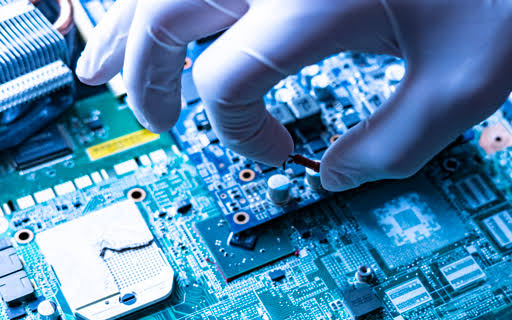
The semiconductor industry has become one of the most important parts of the modern global economy. From smartphones and laptops to electric vehicles, medical equipment, artificial intelligence, and communication networks, almost every advanced electronic product depends on semiconductor chips. These tiny components play a significant role in making electronic devices faster, smarter, and more efficient. As technology continues to develop, demand for semiconductors is increasing across several industries, creating new opportunities for manufacturers, suppliers, and investors.
India is gradually strengthening its position in the global semiconductor ecosystem. Government initiatives, increasing electronics production, international partnerships, and investments in chip manufacturing are attracting attention to the domestic technology sector. As a result, semiconductor stocks in India have become an interesting topic among investors looking for businesses connected to the country’s long-term technological development. However, understanding this sector requires more than simply identifying company names. Investors should examine business models, financial performance, industry opportunities, competition, and possible risks before making investment decisions.
This article explains the Indian semiconductor industry, introduces companies connected to the sector, and discusses important factors that investors should consider when researching this developing market.
Understanding the Semiconductor Industry
Semiconductors are materials that have electrical properties between those of conductors and insulators. Silicon is the most widely used material in semiconductor manufacturing because of its suitability for producing electronic components. Semiconductor chips are designed to process information, store data, control electrical systems, and perform calculations.
These chips are used in almost every modern technology category. Smartphones require processors and memory chips, vehicles use semiconductor components for safety and electronic control systems, and data centres depend on advanced chips to manage large computing workloads. Artificial intelligence applications also require powerful processors capable of handling complex calculations.
The semiconductor industry includes several specialised activities, such as chip design, fabrication, testing, assembly, packaging, and equipment manufacturing. Some businesses focus on designing chips, while others manufacture them or provide supporting services. Understanding these different activities is important because companies connected to semiconductors may have very different sources of revenue and growth opportunities.
Why India’s Semiconductor Industry Is Gaining Attention
India has traditionally been recognised for its software development, information technology services, and electronics assembly capabilities. However, the country is now working to expand its semiconductor manufacturing and design ecosystem. Reducing dependence on imported electronic components and developing domestic production capabilities are important objectives behind this development.
The growing demand for consumer electronics, electric vehicles, telecommunications equipment, and industrial automation is creating opportunities for semiconductor-related businesses. India’s large domestic market also provides potential demand for electronic components and advanced technologies.
Government support has further increased interest in the industry. Incentives, infrastructure development, research initiatives, and partnerships with international technology companies are helping establish the foundations for future semiconductor production.
These developments explain why investors are increasingly researching semiconductor stocks in India. Nevertheless, the industry is capital-intensive and technically complex, meaning that its development will require substantial investment, skilled professionals, reliable infrastructure, and long-term planning.
Major Companies Connected to India’s Semiconductor Sector
India’s semiconductor ecosystem includes companies involved in chip design, electronics manufacturing, engineering services, embedded systems, and semiconductor-related technologies. Not every company in this category operates a semiconductor fabrication plant, so investors should understand the difference between direct manufacturers and supporting businesses.
1. Tata Elxsi
Tata Elxsi is an engineering and technology services company involved in product design, embedded systems, automotive technology, and digital engineering. Its work includes areas connected to semiconductor design and electronics development.
The company supports businesses that require advanced engineering solutions for automotive systems, communication technologies, and electronic products. As demand for intelligent devices and connected technologies increases, specialised engineering services may become increasingly important.
Investors researching Tata Elxsi should examine its revenue growth, operating margins, client concentration, and valuation. Its connection to semiconductor-related engineering should not be confused with owning or operating a large chip fabrication facility.
2. MosChip Technologies
MosChip Technologies is associated with semiconductor design, product engineering, and embedded systems development. Its services cover areas such as integrated circuit design, silicon engineering, and electronic product development.
The company operates in a specialised part of the semiconductor ecosystem where technical expertise and research capabilities are important. As businesses develop more advanced electronic products, demand for chip design and engineering support may increase.
However, investors should evaluate its financial performance, project pipeline, profitability, and ability to secure long-term business opportunities. Smaller technology companies can experience significant changes in revenue and earnings, making careful financial analysis particularly important.
3. CG Power and Industrial Solutions

CG Power operates in electrical engineering and industrial solutions. The company has also become relevant to semiconductor discussions through its involvement in India’s semiconductor manufacturing and outsourced semiconductor assembly and testing ecosystem.
Its semiconductor-related initiatives are important because chip production requires specialised manufacturing, assembly, and testing capabilities. These activities can support the development of a broader domestic electronics supply chain.
Investors should distinguish the company’s established electrical and industrial businesses from its developing semiconductor-related operations. The financial contribution of new projects may take time to become significant.
4. Kaynes Technology India
Kaynes Technology is involved in electronics manufacturing services and integrated electronics solutions. Its business includes manufacturing support for industries such as automotive, aerospace, industrial electronics, and medical technology.
Electronics manufacturing is closely connected to semiconductor demand because electronic products require chips and other specialised components. Companies operating in this area may benefit from increasing domestic electronics production.
Kaynes Technology is therefore relevant when examining businesses connected to the semiconductor supply chain. Investors should review its order book, manufacturing capacity, debt position, margins, and execution capabilities before assessing its long-term potential.
5. Bharat Electronics Limited
Bharat Electronics Limited, commonly known as BEL, is a major Indian defence electronics company. It develops and manufactures electronic systems for defence, communication, surveillance, radar, and other strategic applications.
Although BEL is not primarily a semiconductor fabrication company, its products depend on advanced electronic components and semiconductor technologies. The development of domestic chip capabilities could support the wider defence electronics ecosystem.
Investors should examine BEL’s defence order book, revenue growth, profitability, government spending exposure, and valuation. Its investment case is broader than the semiconductor industry alone.
6. SPEL Semiconductor Limited
SPEL Semiconductor is one of the companies worth examining when researching India’s semiconductor manufacturing ecosystem. It is associated with semiconductor assembly and testing services, which are important stages in the production of electronic chips. Semiconductor components must undergo several processes before they can be integrated into finished electronic products.
The company’s business is connected to the outsourced semiconductor assembly and testing segment. This area can benefit from increasing demand for locally available semiconductor services and a more diversified global supply chain. However, investors should carefully study its manufacturing capacity, customer relationships, financial results, and ability to compete with established international companies.
7. RIR Power Electronics
RIR Power Electronics operates in the power semiconductor segment. Power semiconductors are used to control and convert electrical energy in applications such as renewable energy systems, electric vehicles, industrial equipment, and power supplies.
The increasing adoption of electric mobility and renewable energy could support demand for advanced power electronics over the longer term. However, investors should examine the company’s product capabilities, manufacturing expansion, financial stability, and competitive position rather than relying entirely on industry growth expectations.
8. HCL Technologies
HCL Technologies is a major Indian IT services and engineering company with capabilities in semiconductor engineering, embedded systems, and product development. Its business exposure includes technology services that support companies operating in the semiconductor and electronics industries.
The company’s engineering expertise may provide opportunities as global chip manufacturers and electronics businesses increase their research and development activities. However, HCL Technologies is a diversified IT services business rather than a pure semiconductor company. Its overall financial performance is influenced by several technology segments.
Understanding Different Semiconductor Investment Categories
Before selecting companies, investors should understand that the semiconductor ecosystem includes several business categories. Each category has different opportunities, operating requirements, and financial risks.
| Semiconductor segment | Main activity | Examples of Indian listed exposure |
|---|---|---|
| Chip design | Designing integrated circuits | MosChip Technologies |
| Engineering services | Semiconductor-related engineering and embedded systems | Tata Elxsi, HCL Technologies |
| Assembly and testing | Packaging and testing semiconductor chips | CG Power, Kaynes Technology, SPEL Semiconductor |
| Power semiconductors | Components for power conversion and control | RIR Power Electronics |
| Electronics manufacturing | Producing electronic products and components | Kaynes Technology, Dixon Technologies |
This classification is useful because companies may participate in the same broad industry without having identical business models. A chip design company earns revenue differently from a semiconductor packaging business. Similarly, an electronics manufacturer may benefit from rising chip demand without manufacturing chips itself.
Government Initiatives Supporting Semiconductor Development
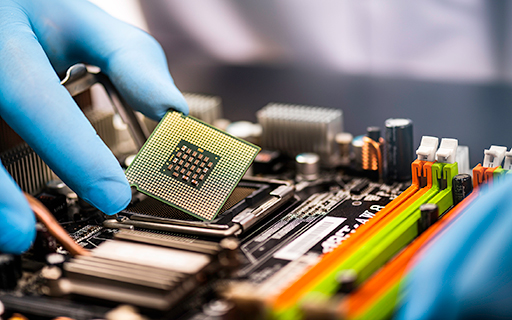
Government policy is an important factor behind India’s semiconductor ambitions. The country wants to establish a stronger domestic ecosystem covering chip design, manufacturing, packaging, testing, equipment, and materials.
The Semicon India Programme was introduced to encourage investment in semiconductor manufacturing and related activities. Financial incentives and partnerships with international companies are intended to support businesses that require substantial capital and specialised technology.
In 2026, the government also announced India Semiconductor Mission 2.0 as part of the Union Budget 2026–27. Its focus includes semiconductor equipment and materials manufacturing, domestic chip design capabilities, research, and stronger supply chains.
Press Information Bureau+1
These initiatives could create opportunities for companies participating in India’s technology and electronics ecosystem. However, government announcements should not automatically be considered evidence of immediate business profitability. Investors should monitor project completion, commercial production, customer demand, and actual revenue generation.
Major Growth Drivers of the Indian Semiconductor Industry
1. Increasing Demand for Electronic Devices
Smartphones, televisions, computers, smart appliances, and wearable devices require semiconductor components. As more consumers adopt digital products, demand for electronic components may continue increasing.
India’s expanding consumer market provides an opportunity for businesses involved in electronics manufacturing and semiconductor-related services. Domestic production could also help manufacturers develop more reliable supply chains.
2. Electric Vehicle Development
Electric vehicles depend on several types of semiconductor components. Battery management systems, charging equipment, motor controllers, sensors, and vehicle safety systems all require electronic chips.
As electric mobility develops, demand for power semiconductors and specialised electronic components may increase. This creates potential opportunities for companies developing products for automotive and energy applications.
3. Artificial Intelligence and Data Centres
Artificial intelligence has increased the importance of high-performance computing. AI systems require advanced processors, memory components, networking chips, and specialised hardware.
Data centres also depend on semiconductor technology for servers, storage systems, cooling controls, and networking equipment. The expansion of digital infrastructure could therefore support demand across several semiconductor categories.
4. Government Support and Foreign Investment
International semiconductor companies are exploring manufacturing and technology opportunities in India. Partnerships can provide access to technical expertise, manufacturing knowledge, and global customer networks.
Government incentives may help improve the commercial feasibility of projects. However, businesses must still demonstrate operational efficiency, product quality, and competitive pricing to achieve sustainable growth.
5. Supply Chain Diversification
Global companies are looking for ways to diversify semiconductor manufacturing and reduce excessive dependence on a limited number of production locations.
India’s developing manufacturing ecosystem may benefit from this trend. If local facilities become commercially successful, domestic suppliers and supporting businesses could receive opportunities from international customers.
Important Factors to Check Before Investing
Investing in semiconductor-related businesses requires detailed research. Investors should not select shares simply because a company appears in a semiconductor stock list.
Some important factors include:
-
Revenue growth: Check whether the company’s sales are increasing consistently.
-
Profitability: Examine operating margins, net profit, and earnings quality.
-
Debt levels: Review borrowing requirements and interest expenses.
-
Order book: Understand the value and quality of confirmed business orders.
-
Manufacturing capacity: Check whether announced facilities are operational or still under development.
-
Customer concentration: Evaluate whether the business depends heavily on a small number of customers.
-
Valuation: Compare the share price with earnings, cash flows, and future growth expectations.
These indicators can help investors understand whether a company’s business expansion is translating into sustainable financial performance.
Risks Associated with Semiconductor Stocks
Although the semiconductor industry offers interesting long-term opportunities, investing in this sector also involves several risks. Semiconductor manufacturing requires substantial capital investment, specialised equipment, advanced technology, and skilled employees. A delay in setting up a manufacturing facility can affect expected revenue and profitability.
Another concern is the cyclical nature of the semiconductor market. Demand may increase rapidly during periods of technological expansion but can weaken when electronics manufacturers reduce production or customers delay purchases. International competition, changes in technology, and supply chain disruptions can also influence business performance.
Valuation is another important consideration. Companies associated with emerging industries sometimes experience significant share price increases because of future expectations. However, a strong industry outlook does not guarantee that every related company will deliver attractive investment returns. Recent market commentary has highlighted how semiconductor-related shares can experience substantial corrections even when the industry’s long-term prospects remain promising.
Investors should follow a structured approach when researching companies connected to semiconductor manufacturing and technology. The first step is to understand the company’s actual business activities. Some companies manufacture semiconductor components, while others provide engineering services, electronic manufacturing, or testing solutions.
The second step is to examine financial statements. Revenue, operating profit, net profit, cash flow, debt, and return on capital can provide useful information about the financial health of a business. Investors should also examine whether a company has sufficient resources to finance its expansion plans.
The third step is to study management announcements and project updates. Semiconductor businesses often announce new facilities, technology partnerships, and capacity expansions. However, investors should distinguish between proposed projects, facilities under construction, and operations that have started commercial production.
A balanced research approach can help investors understand the difference between genuine business progress and market excitement.
Future Outlook for India’s Semiconductor Industry
India’s semiconductor industry has significant development potential because of increasing digital adoption, expanding electronics manufacturing, and demand from emerging technologies. Artificial intelligence, electric mobility, telecommunications, renewable energy, and industrial automation are expected to remain important areas of technological development.
The development of domestic semiconductor manufacturing facilities could gradually strengthen India’s position in the international electronics supply chain. Local companies may gain opportunities in packaging, testing, chip design, power electronics, and specialised manufacturing equipment.
However, building a competitive semiconductor ecosystem takes considerable time. Companies must develop technical expertise, establish reliable production processes, attract experienced professionals, and meet international quality standards. Successful partnerships with established global players will also be important.
For investors studying semiconductor stocks in India, the future should be evaluated through actual business developments rather than expectations alone. Production milestones, customer contracts, earnings growth, and improvements in manufacturing capabilities will provide better indicators of long-term progress.
Are Semiconductor Stocks Suitable for Long-Term Investors?
Semiconductor-related businesses may attract long-term investors who believe in the growth of electronics manufacturing and advanced technology. The industry has applications across several sectors, making it an important part of the modern economy.
However, suitability depends on an investor’s financial goals, risk tolerance, investment horizon, and understanding of individual companies. Some businesses may have established revenue streams, while others are investing heavily in new manufacturing capabilities. Their financial risk profiles can therefore be very different.
Long-term investors should avoid making decisions based only on popular market discussions or short-term share price movements. Comparing companies, understanding their business models, and reviewing financial results can help develop a more informed investment approach.
Diversification is also important. Instead of depending entirely on one industry, investors can consider maintaining exposure to different sectors according to their individual financial circumstances.
Conclusion
The Indian semiconductor industry is developing into an important part of the country’s long-term technology and manufacturing ambitions. Growing demand for electronics, artificial intelligence, electric vehicles, and digital infrastructure is creating opportunities across chip design, semiconductor manufacturing, packaging, testing, and engineering services.
Companies such as MosChip Technologies, CG Power, Kaynes Technology, Tata Elxsi, SPEL Semiconductor, and RIR Power Electronics provide different types of exposure to this developing ecosystem. Other diversified businesses, including HCL Technologies and Bharat Electronics, also have connections to semiconductor-related technologies.
However, investors should remember that not every company associated with the semiconductor industry is a direct chip manufacturer. Business performance, financial strength, project execution, competition, and stock valuation should all be examined before making investment decisions.
Overall, semiconductor stocks in India represent an interesting area for investors researching the country’s growing technology ecosystem. A careful, research-driven approach can help identify businesses with genuine capabilities and sustainable growth potential while avoiding decisions based purely on market excitement.
Frequently Asked Questions (FAQs)
1. What are semiconductor stocks?
Semiconductor stocks are shares of companies involved in chip design, manufacturing, packaging, testing, semiconductor equipment, and related technologies. These businesses support industries such as automobiles, telecommunications, electronics, and artificial intelligence.
2. Which Indian companies are associated with the semiconductor industry?
Some Indian listed companies with semiconductor-related business exposure include MosChip Technologies, CG Power, Kaynes Technology, Tata Elxsi, SPEL Semiconductor, and RIR Power Electronics. Their business activities and levels of semiconductor exposure differ.
3. Why is the semiconductor industry growing in India?
The industry is attracting attention because of government support, increasing electronics production, foreign investment, domestic manufacturing ambitions, and growing demand for advanced electronic components.
4. Are semiconductor stocks risky?
Yes. These shares can experience price volatility because of technological changes, competition, manufacturing delays, high capital requirements, and changing market demand. Investors should research individual businesses before investing.
5. Can semiconductor companies benefit from artificial intelligence?
Yes. Artificial intelligence requires processors, memory chips, networking components, and specialised computing hardware. Companies supplying these technologies or supporting their development may benefit from increasing demand.
6. What should investors check before buying semiconductor shares?
Investors should examine financial performance, revenue growth, profitability, debt, valuations, order books, manufacturing progress, and the company’s actual involvement in semiconductor activities.
Final Perspective: The long-term development of India’s semiconductor ecosystem could create opportunities across multiple technology and manufacturing segments. Nevertheless, careful company selection and disciplined investment research remain essential.