

Introduction
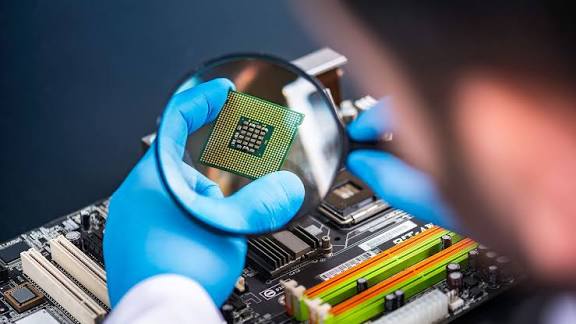
Semiconductors have become an essential part of modern life, powering everything from smartphones and laptops to electric vehicles, medical equipment, cloud computing systems, and artificial intelligence infrastructure. These tiny electronic components help devices process information, store data, and perform complex operations. As technology continues to advance, the demand for faster, smaller, and more energy-efficient chips is creating new opportunities for businesses across the global technology industry. This growing importance has also attracted investors who want to understand the companies responsible for designing and manufacturing these critical components.
For investors, semiconductor stocks offer exposure to several major technological developments, including artificial intelligence, data centers, automation, and connected devices. However, the industry is also known for its cyclical nature, substantial capital requirements, international competition, and changing supply-and-demand conditions. Understanding how semiconductor companies operate, what drives their financial performance, and which risks influence their valuations can help investors make more informed decisions. Rather than focusing only on popular companies or recent price increases, it is important to evaluate the industry’s long-term prospects alongside individual business fundamentals.
1. Understanding the Semiconductor Industry
The semiconductor industry produces the chips that enable electronic devices to function. These components control electrical signals and support calculations, memory storage, communication, and data processing. Although semiconductors are physically small, manufacturing them requires advanced engineering, highly specialized equipment, cleanroom facilities, and significant investment in research and development.
The industry includes several types of businesses. Some companies design chips but outsource manufacturing, while others operate fabrication facilities that produce chips for customers. There are also companies specializing in memory products, chipmaking equipment, electronic design software, and testing services. Each segment has different costs, competitive advantages, and growth opportunities.
Understanding these distinctions is useful when evaluating semiconductor stocks, because two companies operating in the same industry may have very different financial characteristics. A chip designer may depend heavily on product innovation and intellectual property, whereas a manufacturing company may require enormous capital expenditure to maintain advanced production facilities. Investors should examine each business model separately instead of assuming that every semiconductor company will benefit equally from rising technology demand.
2. Why Semiconductor Stocks Attract Investors
One of the biggest attractions of the semiconductor industry is its connection to long-term technological progress. Businesses and consumers increasingly depend on digital systems, creating demand for computing power, storage, connectivity, and specialized processing capabilities. As industries modernize, semiconductor manufacturers and designers may benefit from new applications and expanding markets.
Artificial intelligence has become an especially important demand driver. AI applications require powerful processors, high-bandwidth memory, networking equipment, and data center infrastructure. Cloud service providers are investing in computing capacity to support these workloads, creating opportunities for selected chip designers, manufacturers, and equipment suppliers. Other potential growth areas include electric vehicles, industrial robotics, advanced telecommunications, and smart devices.
Nevertheless, investors should distinguish between a promising industry and an attractively priced investment. Strong demand does not automatically guarantee that every company will deliver superior returns. Share prices may already reflect optimistic expectations, and competition can reduce profitability even when sales increase. When researching semiconductor stocks, investors should consider future earnings potential, valuation, financial strength, and the sustainability of competitive advantages rather than relying exclusively on industry growth forecasts.
3. Major Categories of Semiconductor Companies
The semiconductor market includes several business categories, each offering a different way to participate in technological development.
Chip designers: These companies develop processors, graphics chips, communication components, and specialized computing products. Their performance often depends on innovation, product demand, design expertise, and relationships with manufacturing partners.
Foundries: Foundries manufacture chips designed by other companies. Their competitive position depends on production technology, manufacturing efficiency, customer relationships, and their ability to deliver reliable output at advanced process nodes.
Memory manufacturers: These businesses produce memory components used in computers, smartphones, servers, and AI systems. Their earnings can be particularly sensitive to supply levels, selling prices, and changes in demand.
Semiconductor equipment suppliers: These companies provide the machinery and technologies required to manufacture and inspect chips. Their performance is linked to capital spending by semiconductor manufacturers.
Electronic design automation providers: These businesses supply specialized software that helps engineers design, simulate, and verify complex integrated circuits.
These categories are interconnected, but their financial performance may differ significantly. A slowdown in consumer electronics might affect some chip designers more directly, while increased factory investment could support equipment suppliers. Diversifying research across these segments can help investors better understand the opportunities and risks within the semiconductor ecosystem.
4. Important Semiconductor Companies to Research
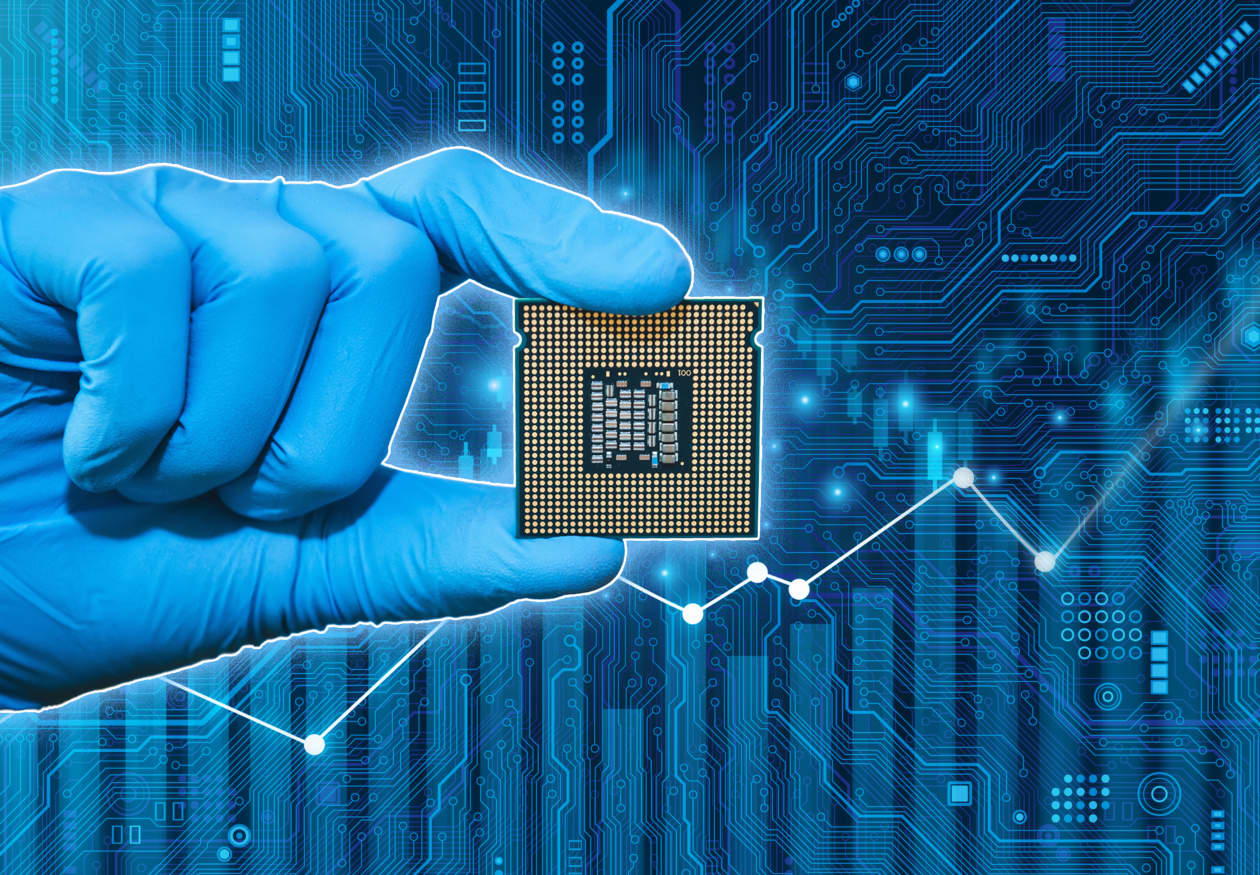
Investors can begin their research by examining established companies with different roles in the global chip industry. The following examples are for educational purposes and are not personalized investment recommendations.
NVIDIA: NVIDIA is widely associated with graphics processing units and accelerated computing, including AI infrastructure. Its business benefits from demand for advanced computing systems, although investors should evaluate valuation, competition, customer spending, and the sustainability of earnings growth.
Taiwan Semiconductor Manufacturing Company (TSMC): TSMC is a major contract chip manufacturer serving customers across the semiconductor industry. Its manufacturing expertise and scale are important competitive advantages, while geopolitical exposure, capital expenditure, and production concentration remain relevant risks.
Broadcom: Broadcom operates across semiconductor and infrastructure software markets. Its semiconductor activities include products for networking and connectivity, areas that can benefit from expanding data center infrastructure. Investors should also examine customer concentration, acquisition-related obligations, and business execution.
Advanced Micro Devices (AMD): AMD develops processors and graphics products for personal computers, servers, and other computing applications. Its results depend on product competitiveness, market share, pricing, and demand across its major business segments.
ASML: ASML supplies advanced lithography equipment used in semiconductor manufacturing. Its specialized technology plays an important role in producing leading-edge chips, although export restrictions, customer investment cycles, and the timing of equipment orders can affect performance.
Researching semiconductor stocks across different business categories helps investors avoid treating the entire industry as a single opportunity. Each company has its own financial position, valuation, competitive environment, and exposure to changing technology trends.
5. The Role of Artificial Intelligence in Semiconductor Growth
Artificial intelligence has increased the importance of specialized computing hardware. Training and running advanced AI models can require substantial processing capacity, fast memory, high-speed networking, and efficient power management. These requirements are encouraging investment in data centers and supporting demand for certain semiconductor products.
AI-related growth extends beyond graphics processors. Memory manufacturers may benefit from demand for high-bandwidth memory, networking companies may supply faster data transmission technologies, and equipment providers may receive orders as manufacturers expand production capacity. Power-management chips and advanced packaging technologies can also become increasingly important as computing systems grow more complex.
However, AI demand should not be viewed as a guarantee of uninterrupted industry growth. Technology companies may reduce infrastructure spending if returns on investment disappoint, while new competitors and alternative chip designs could change market share. Some AI-related businesses may also face high valuations that leave little room for disappointing results.
When assessing semiconductor stocks connected to artificial intelligence, investors should examine actual revenue contributions, customer commitments, operating margins, production capacity, and cash flow. These measures can help distinguish established commercial demand from expectations that have not yet translated into sustainable financial performance.
6. Key Factors to Evaluate Before Investing
A careful evaluation involves more than checking a company’s latest share price. Investors should understand how the business earns money, whether its competitive position is sustainable, and how much growth is already reflected in its valuation.
Important factors include revenue growth, gross margins, operating income, free cash flow, debt levels, research and development spending, and capital expenditure. Comparing these figures over several years can reveal whether a company is improving its operations or benefiting mainly from a temporary increase in demand.
Valuation is equally important. Price-to-earnings ratios, price-to-sales ratios, and enterprise-value-based measures can provide useful context when compared with historical levels and relevant competitors. However, these metrics should be interpreted alongside expected growth, business quality, and financial risk.
Investors should also study customer concentration and supply-chain exposure. A company that relies heavily on a small number of customers may face greater uncertainty if one customer reduces orders. Similarly, dependence on particular manufacturing facilities or international markets can create operational challenges.
Ultimately, semiconductor stocks should be evaluated using a combination of financial analysis, industry knowledge, and realistic expectations. No single metric can determine whether a company represents good value, and past share-price performance cannot guarantee future returns.
7. Risks and Challenges in the Semiconductor Market
The semiconductor industry offers significant opportunities, but it also faces several structural and market-related challenges. One major concern is cyclicality. Demand can rise rapidly during periods of technology investment and weaken when customers reduce purchases or hold excess inventory. These shifts can affect revenue, production utilization, and profit margins.
Another challenge is the cost of manufacturing advanced chips. Building and upgrading fabrication facilities requires substantial investment, while technological progress can make existing equipment less competitive. Companies that invest heavily may struggle if expected demand does not materialize.
Geopolitical tensions and trade restrictions can also influence the industry. Semiconductor supply chains cross multiple countries, and changes in export regulations, tariffs, or international relations may affect access to equipment, customers, and production facilities. Natural disasters and manufacturing disruptions can create additional uncertainty.
Competition presents another risk. Companies must continuously invest in research and development to maintain performance advantages and defend market share. Even successful businesses can experience declining margins if rivals introduce better products or customers negotiate lower prices.
For investors considering semiconductor stocks, these challenges reinforce the importance of diversification, disciplined valuation, and a long-term perspective. Investing in a growing industry does not eliminate the possibility of significant losses, particularly when expectations are high.
8. Semiconductor Stocks in the Indian Market
India is working to strengthen its semiconductor ecosystem through investments in manufacturing, electronics production, chip design, and related infrastructure. Government incentives and private-sector projects aim to expand domestic capabilities and reduce dependence on overseas supply chains. As these efforts develop, investors may find opportunities among companies involved in semiconductor manufacturing, electronic components, industrial equipment, and supporting services.
India’s listed market includes businesses with exposure to electronics manufacturing and semiconductor-related activities, but not every company connected to electronics is a pure semiconductor investment. Some businesses manufacture printed circuit boards, assemble electronic products, provide design services, or supply components to broader industries. Their revenues may depend on several markets rather than chip production alone.
Investors should therefore examine the exact source of a company’s revenue, the status of announced projects, funding requirements, customer agreements, and expected timelines. Announced investment plans do not necessarily translate into immediate profits, and semiconductor manufacturing projects can take considerable time to become commercially productive.
For anyone researching semiconductor stocks in India, it is sensible to distinguish between established operating businesses and companies whose investment case depends largely on future projects. Financial disclosures, execution progress, cash requirements, and realistic valuations deserve close attention before any investment decision.
9. Long-Term Investment Strategies
A long-term approach to semiconductor investing begins with clear objectives and an understanding of personal risk tolerance. Investors who believe in the expansion of computing, automation, and digital infrastructure may choose to research companies with durable competitive advantages, healthy balance sheets, and credible long-term growth opportunities.
Diversification can reduce reliance on a single company or market segment. Instead of concentrating entirely on one chip designer, an investor might study businesses across chip design, manufacturing, equipment, and memory. A diversified technology or semiconductor-focused fund may also provide broader exposure, although its holdings, fees, concentration, and risks should be reviewed carefully.
Regular investing can help reduce the pressure to predict short-term market movements, but it does not guarantee profits or protect against losses. Investors should establish a suitable allocation, avoid excessive borrowing, and periodically review whether their original investment thesis remains valid.
It is also important to monitor changes in earnings expectations, inventory levels, customer spending, and technological competition. A company that looked attractive several years ago may face a different business environment today. Long-term investing requires ongoing research rather than simply buying shares and ignoring developments.
Conclusion
The semiconductor industry plays a central role in the development of artificial intelligence, cloud computing, connected devices, electric vehicles, and modern industrial systems. Its importance creates opportunities for chip designers, foundries, memory producers, equipment suppliers, and other businesses supporting the global technology supply chain.
However, semiconductor stocks are influenced by industry cycles, valuation changes, technological competition, capital requirements, and geopolitical uncertainty. Investors should examine individual company fundamentals instead of assuming that every business will benefit equally from increasing demand. Revenue quality, profitability, cash flow, competitive advantages, and reasonable valuations are all important considerations.
A disciplined investment approach combines industry research with risk management and realistic expectations. By understanding how semiconductor companies operate and evaluating their financial performance carefully, investors can make better-informed decisions about whether this technology-driven sector fits their broader investment goals. No investment is guaranteed to succeed, so research and diversification remain essential.