


Introduction
Semiconductors are essential components of modern technology, powering smartphones, computers, automobiles, data centers, industrial equipment, communication systems, and artificial intelligence infrastructure. As demand for advanced computing continues to expand, the semiconductor industry has become an important area for investors and businesses to understand. Semiconductor stocks represent companies involved in chip design, manufacturing, equipment, memory, packaging, testing, and related technologies.
The industry is experiencing significant growth in 2026. The World Semiconductor Trade Statistics (WSTS) reported that global semiconductor sales reached $702 billion during the first half of 2026, up 102% from the same period a year earlier. WSTS also said that its updated calculation points to approximately $1.655 trillion in semiconductor sales for the full year, although it noted that the calculation incorporates actual Q2 results while later quarters follow assumptions from its earlier forecast. This rapid expansion has increased attention on companies connected to AI infrastructure, memory, advanced logic, and semiconductor manufacturing.
What Are Semiconductor Stocks?
Semiconductor stocks are shares of publicly traded companies whose businesses are connected to the semiconductor ecosystem. This ecosystem is much broader than companies that manufacture chips. It includes businesses that design processors, manufacture integrated circuits, produce memory products, supply semiconductor manufacturing equipment, provide chip-design software, and perform packaging and testing.
Understanding these different categories is important because companies can respond differently to changes in technology demand. A chip designer may benefit from increased demand for processors, while a memory producer may be more directly affected by memory pricing and supply conditions. Equipment manufacturers can be influenced by capital spending from chipmakers. As a result, semiconductor companies can have different revenue patterns, margins, competitive advantages, and risks even when they operate within the same overall industry.
Major Segments of the Semiconductor Industry
The semiconductor industry contains several major segments. Logic chips are used for processing and computing tasks and include many of the processors used in servers, computers, smartphones, and AI systems. Memory products store and retrieve information and include technologies such as DRAM and NAND.
Another important segment is semiconductor manufacturing equipment. Chip fabrication requires highly specialized machines for processes such as lithography, deposition, etching, inspection, and packaging. Companies that supply this equipment can therefore benefit when semiconductor manufacturers increase their production capacity.
Other areas include analog chips, sensors, power semiconductors, microcontrollers, networking components, and automotive chips. These segments serve different end markets, meaning investors analyzing the industry should examine the specific business model rather than treating all semiconductor companies as identical.
AI and Semiconductor Demand
Artificial intelligence has become one of the major forces influencing semiconductor demand. AI systems require substantial computing capacity, advanced processors, high-bandwidth memory, networking equipment, and data-center infrastructure. The Semiconductor Industry Association reported in August 2026 that worldwide semiconductor sales reached $403.3 billion in Q2 2026, representing a 35.1% increase from Q1. It also reported that June 2026 sales were 123.6% higher than June 2025.
WSTS has similarly identified AI infrastructure, high-bandwidth memory, and accelerated computing platforms as major drivers of the current semiconductor expansion. Its 2026 forecast expected memory to be particularly strong, while logic was also projected to grow substantially. For investors researching semiconductor stocks, this makes it important to understand how individual companies participate in AI-related supply chains rather than simply assuming that every chip company will experience the same level of demand.
Memory Semiconductor Companies
Memory is a major part of the semiconductor ecosystem and has a distinct business cycle. DRAM and NAND products are widely used in computers, smartphones, servers, storage systems, and data centers. Memory demand can increase significantly when cloud infrastructure and AI computing require larger amounts of high-performance storage and memory.
According to WSTS, memory was the strongest product category in its 2026 market outlook, with the organization highlighting exceptional growth associated with AI infrastructure and high-bandwidth memory. However, memory businesses can also experience substantial price fluctuations because supply additions and demand changes can affect industry pricing. Therefore, analysis of memory-related companies should include production capacity, pricing trends, product mix, capital spending, and balance-sheet strength.
Chip Designers and Processor Companies
Chip designers develop processors and other integrated circuits used across computing and electronic devices. Their products can include central processing units, graphics processors, AI accelerators, networking chips, mobile processors, and specialized application-specific chips.
The competitive landscape can change quickly as companies develop new architectures and customers adjust their technology strategies. Product performance, power efficiency, software ecosystems, manufacturing partnerships, and customer relationships can all influence business performance.
Recent market activity illustrates the strong investor attention around AI-related chip companies. Reuters reported in September 2026 that AMD surpassed a $1 trillion market capitalization amid increased confidence in its AI business, while other major chip companies also experienced significant market gains. Such market movements demonstrate the importance of AI expectations in the sector, but share-price performance should not be treated as a guarantee of future results.
Semiconductor Manufacturing Equipment
Manufacturing equipment companies occupy a different position in the semiconductor supply chain. Instead of selling chips directly to consumers or data-center operators, these businesses supply the machines and technologies needed to manufacture advanced semiconductor products.
When chip manufacturers build new fabrication capacity or upgrade existing facilities, equipment suppliers can receive significant orders. Demand can therefore be influenced by semiconductor capital expenditure, technology transitions, fabrication capacity expansion, and government-supported manufacturing initiatives.
For investors researching semiconductor stocks, understanding this distinction can provide a broader view of the industry. Equipment companies may have different revenue cycles and customer concentrations compared with chip designers or memory manufacturers.
Foundries and Semiconductor Manufacturing
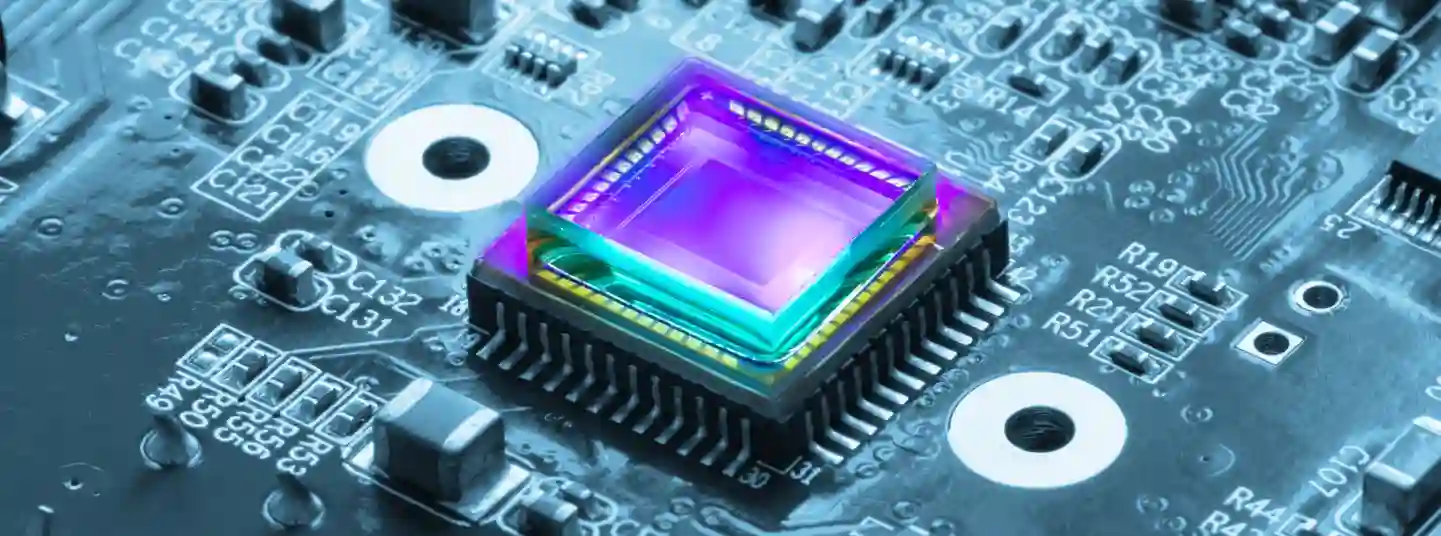
Some semiconductor companies focus heavily on manufacturing chips designed by other businesses. These companies operate fabrication facilities, commonly known as foundries, and provide manufacturing services to chip designers.
Advanced manufacturing processes require enormous investments in facilities, equipment, research, and engineering. Companies competing at the leading edge must continually invest to maintain technology leadership. This creates both opportunities and financial challenges because capital expenditures can be substantial.
Manufacturing companies can also be affected by capacity utilization, customer demand, production yields, technology transitions, geographic concentration, and supply-chain conditions. These factors should be examined when evaluating companies involved in semiconductor fabrication.
Automotive and Industrial Semiconductor Demand
The semiconductor industry is not limited to AI and consumer electronics. Modern vehicles contain chips for power management, safety systems, infotainment, driver assistance, connectivity, sensors, and increasingly automated driving functions.
Industrial equipment also relies on microcontrollers, sensors, power-management chips, communications components, and control processors. Renewable energy systems, factory automation, robotics, medical devices, and infrastructure equipment can all require semiconductor components.
This diversification can provide semiconductor companies with exposure to multiple end markets. At the same time, each market has different demand cycles and technological requirements. An investor should therefore examine the percentage of revenue that comes from each end market when analyzing a semiconductor business.
Key Factors to Analyze
When evaluating semiconductor stocks, investors can examine several fundamental factors. Revenue growth can indicate whether the company’s products are gaining demand, while operating margins can provide insight into profitability and pricing power. Research and development spending is also important because semiconductor competition depends heavily on technological innovation.
Other useful factors include free cash flow, debt levels, capital expenditure, customer concentration, product diversification, and inventory trends. Companies with strong balance sheets may have greater flexibility when industry conditions change.
Valuation is another important consideration. A company operating in a rapidly growing industry can still have a share price that reflects substantial future expectations. Comparing valuation measures with earnings growth, cash flow, competitive position, and industry conditions can provide a more complete perspective.
Supply Chain and Geopolitical Risks
The semiconductor industry has a highly interconnected global supply chain. Chip design, manufacturing, equipment production, packaging, materials, and final applications may involve companies located across several countries.
Trade restrictions, export controls, tariffs, geopolitical tensions, natural disasters, and transportation disruptions can affect the availability of semiconductor products or manufacturing equipment. Companies may respond by diversifying production locations or building additional capacity in different regions.
These developments can influence both costs and investment requirements. For investors, geographic exposure and supply-chain concentration are therefore important considerations when researching semiconductor businesses.
Cyclicality and Market Volatility
Semiconductors are known for their cyclical characteristics. Periods of strong demand can encourage manufacturers to increase capacity, while subsequent oversupply can pressure prices and margins. This cycle can affect company earnings and share prices.
The current industry environment is unusually strong by historical standards. WSTS reported that global semiconductor sales increased 26.2% during 2025 to $795.6 billion and later reported exceptionally strong growth in the first half of 2026. However, current growth rates should not automatically be assumed to continue indefinitely.
Investors should distinguish between structural growth drivers, such as increasing semiconductor content in technology, and temporary factors such as inventory cycles or unusually strong pricing.
How to Research Semiconductor Companies
A structured research process can help investors understand individual companies. The first step is to identify what the company actually sells and which markets generate most of its revenue. A business heavily dependent on AI data centers will have different risks from one focused primarily on automotive chips or industrial electronics.
Next, investors can examine revenue growth, margins, cash flow, research spending, capital expenditure, debt, customer concentration, and competitive positioning. Management commentary and company financial reports can provide additional information about product launches, capacity expansion, and expected demand.
It is also useful to compare a company’s performance with broader industry trends. Strong semiconductor industry growth does not necessarily mean every company will grow at the same rate.
Future Trends in Semiconductor Stocks
Several technology trends are expected to influence the semiconductor industry over the coming years. AI computing, high-bandwidth memory, advanced packaging, data-center expansion, automotive electronics, robotics, edge computing, and connected devices are among the areas receiving significant industry attention.
WSTS currently projects continued semiconductor market expansion into 2027, with memory and logic expected to remain important contributors. The Semiconductor Industry Association likewise describes AI, advanced computing, communications, healthcare, and other semiconductor-enabled technologies as major areas of industry development.
However, technology cycles can change quickly. Investors should continue monitoring demand, product launches, capacity, pricing, competition, regulation, and company-specific financial results rather than relying only on broad industry forecasts.
Conclusion
Semiconductor stocks represent a diverse group of businesses spanning chip design, memory, manufacturing, equipment, packaging, and specialized technologies. The industry is currently experiencing exceptional growth, with AI infrastructure and advanced computing playing major roles in demand. WSTS data indicate that global semiconductor sales reached $702 billion in the first half of 2026, while its updated calculation points toward approximately $1.655 trillion for the full year.
Understanding the industry requires looking beyond headline growth. Company-specific factors such as product portfolios, technology leadership, manufacturing capacity, customer concentration, valuation, capital spending, supply-chain exposure, and financial strength can produce very different outcomes across the sector. For anyone researching semiconductor companies, combining industry-level trends with detailed company analysis can provide a more informed foundation for understanding this rapidly evolving market.