

Introduction
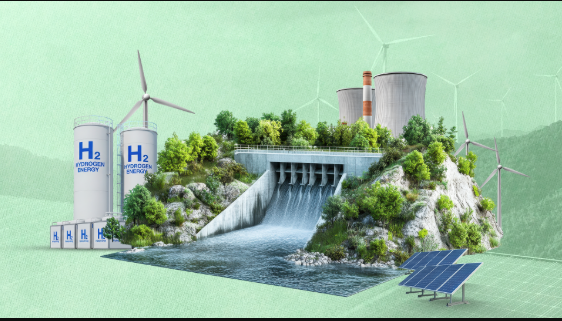
The global energy industry is undergoing a major transformation as countries, businesses, and consumers increase their focus on cleaner and more sustainable sources of electricity. Solar power, wind energy, battery storage, electric infrastructure, and other clean technologies are becoming increasingly important parts of the modern energy system. This transition has also created growing interest in green energy stocks, particularly among investors looking for companies connected to long-term changes in electricity generation and consumption.
The opportunity is supported by significant capital spending across the energy sector. The International Energy Agency expects worldwide energy investment to reach about $3.4 trillion in 2026, with approximately $2.2 trillion directed toward clean energy areas such as renewables, grids, storage, low-emissions fuels, efficiency, and electrification. However, the expansion of renewable energy does not mean every company or stock will perform in the same way. Financing costs, government policy, competition, technology, project execution, and electricity-market conditions can all influence business results.
Understanding the industry therefore requires more than simply identifying companies associated with renewable energy. Investors need to understand how these businesses generate revenue, what their financial obligations look like, how much capital they require, and how changes in the energy market may affect their future performance.
What Are Green Energy Stocks?
Green energy stocks generally refer to publicly traded companies whose businesses are substantially connected to renewable or lower-emission energy technologies and infrastructure. These businesses can operate across many different parts of the energy ecosystem. Some develop and operate solar or wind farms, while others manufacture panels, turbines, batteries, inverters, or other equipment.
The category can also include businesses involved in electricity transmission, energy storage, grid modernization, geothermal technology, hydrogen, electric infrastructure, and related services. Because the sector is broad, two companies described as clean-energy businesses can have very different financial models. A renewable power producer may earn long-term revenue from electricity contracts, while a manufacturer may depend heavily on equipment sales and manufacturing margins.
This distinction is important because renewable energy is not a single industry. It is a collection of interconnected markets. An investor researching the sector should therefore examine the individual company’s operations instead of assuming that all clean-energy businesses respond to market conditions in the same way.
Why Renewable Energy Is Expanding
Renewable energy has experienced substantial capacity growth in recent years. According to the IEA, global renewable capacity additions increased 16% in 2025 to approximately 800 GW, marking another record year. Solar photovoltaic installations accounted for more than three-quarters of new renewable capacity, while wind represented about 20%.
Several factors are contributing to this expansion. Electricity demand is rising because of industrial development, data centers, electric vehicles, cooling requirements, and greater digitalization. The IEA expects global electricity demand to grow by 3.6% in 2026 and 3.8% in 2027. Renewable electricity generation is also forecast to overtake coal-fired generation globally in 2026.
Falling technology costs have also helped renewable energy become more competitive. Solar panels, batteries, and other technologies have benefited from mass manufacturing and technological improvements. Nevertheless, rapid deployment creates new requirements for transmission systems, energy storage, flexible generation, and grid management. These developments can create opportunities for businesses operating beyond traditional renewable power generation.
Major Categories Within Green Energy
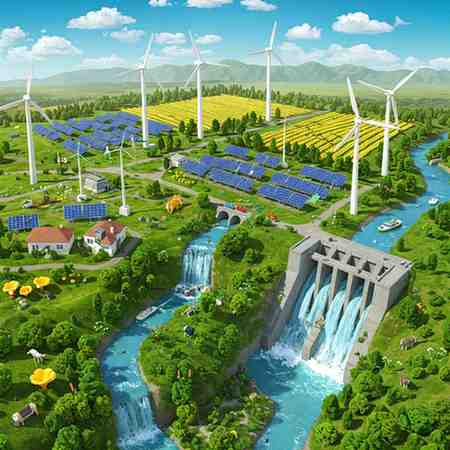
The renewable energy market includes several important segments, and each has its own opportunities and challenges. Solar energy is one of the largest because photovoltaic systems can be deployed across utility-scale projects, commercial properties, and residential installations. Companies can participate through manufacturing, project development, financing, installation, or operation.
Wind energy is another established renewable segment, with both onshore and offshore projects contributing to electricity generation. Battery storage has become increasingly important because solar and wind production can vary depending on weather and time of day. Storage systems can help shift electricity availability and provide flexibility to electricity networks.
Grid infrastructure is another area receiving attention. As renewable generation expands, electricity systems need additional transmission, distribution, and balancing capabilities. Geothermal power, renewable fuels, hydrogen, and other emerging technologies represent additional areas that may contribute to the broader energy transition.
For investors examining green energy stocks, understanding which part of this ecosystem a company serves can be more useful than relying on the broad renewable-energy label alone.
The Role of Solar Energy
Solar power has become one of the most important drivers of renewable capacity growth. Global solar photovoltaic additions exceeded 600 GW in 2025, bringing cumulative solar capacity to roughly 2,800 GW, according to the IEA.
The solar industry contains several different business models. Manufacturers produce modules and related components, developers build large solar projects, and operators generate electricity over many years. Companies may also specialize in inverters, tracking systems, installation services, batteries, or software.
Rapid growth can benefit companies with efficient manufacturing, strong project pipelines, and competitive costs. However, the industry can also experience periods of oversupply and pricing pressure. The IEA’s 2026 technology analysis notes that manufacturing investment in key clean-energy technologies has moderated after earlier expansion, partly because existing manufacturing capacity has exceeded current demand in areas such as solar PV and batteries.
Therefore, investors should distinguish between industry growth and individual company profitability.
Energy Storage and Battery Opportunities
One of the most important developments in renewable energy is the expansion of energy storage. Solar and wind generation can fluctuate, creating a need for technologies that help balance electricity supply and demand.
Battery storage can store electricity during periods of strong renewable generation and release it when demand increases or renewable output declines. This makes storage increasingly relevant to electricity markets with high levels of solar and wind generation.
The IEA reports that battery prices have fallen substantially over the past decade and that storage investment is expanding in several markets. In the United States, for example, battery storage investment has become larger than spending on wind power in 2026, reflecting the increasing importance of flexibility and reliability.
This development has broadened the renewable-energy investment landscape. Businesses involved in battery manufacturing, storage development, grid software, and related infrastructure may become increasingly connected to the renewable-energy expansion.
Green Energy Stocks and India’s Renewable Market
India is becoming an important market for renewable energy investment. The country’s renewable capacity additions increased by almost 60% in 2025, according to the IEA, with nearly 50 GW of new solar photovoltaic capacity and more than 6 GW of new wind capacity added during the year.
India’s expanding electricity demand and renewable-energy development have created opportunities across solar generation, manufacturing, storage, transmission, and related infrastructure. The country’s renewable sector is also attracting increasing attention from public markets. Recent developments include new listings and planned offerings from companies involved in solar manufacturing and renewable power.
At the same time, the Indian market faces financing, transmission, regulatory, and electricity-purchaser risks. IEA analysis has highlighted the relatively high cost of capital for grid-scale renewable projects in India compared with advanced economies, while transmission limitations have also affected renewable capacity development.
These factors demonstrate why investors should evaluate both growth opportunities and structural challenges when researching green energy stocks connected to India.
Important Factors to Examine Before Investing
Investors researching renewable-energy companies can examine several fundamental factors before making any decision. Revenue growth is useful, but it should be considered alongside profitability, cash flow, debt, capital expenditure, and the company’s ability to finance future projects.
Project pipelines also deserve attention. A large pipeline can indicate future growth potential, but announced projects are not necessarily completed projects. Investors can examine development timelines, power purchase agreements, construction progress, financing arrangements, and regulatory approvals.
Another important consideration is valuation. A company operating in a fast-growing industry can still represent a challenging investment if its market valuation assumes extremely high future growth. Comparing valuation measures with expected earnings, cash flow, assets, and industry peers can provide additional context.
Investors should also consider whether a company’s competitive position depends on technology, manufacturing scale, low-cost financing, proprietary intellectual property, or long-term contracts.
Risks Associated With Renewable Energy Investing
Renewable energy offers growth opportunities, but it also carries significant risks. One major risk is the cost of capital. Large solar, wind, and storage projects frequently require substantial upfront investment, so higher interest rates can increase financing expenses and reduce project economics.
Recent market conditions demonstrate this sensitivity. Rising interest rates in 2026 have placed pressure on several renewable-energy businesses because projects often depend on debt financing and long-term future cash flows.
Policy changes can also affect the industry. Renewable projects may depend on tax incentives, subsidies, permitting frameworks, auctions, or other government policies. Changes in these policies can influence project economics and company expectations.
Supply-chain disruptions, commodity prices, competition, currency movements, grid limitations, and delays in project construction can create additional challenges. Investors should therefore avoid viewing renewable energy growth as a guarantee of individual company success.
The Importance of Energy Infrastructure
The renewable transition is not only about producing clean electricity. Infrastructure is equally important. Solar farms and wind projects need transmission networks to deliver electricity to consumers. Battery storage can help manage fluctuations, while digital systems can improve grid coordination.
As electricity demand increases, grid modernization may become one of the most important components of the broader energy transition. Data centers, electric vehicles, industrial electrification, and other power-intensive activities can increase demand for reliable electricity.
This creates a wider opportunity set for companies providing electrical equipment, transmission infrastructure, energy management systems, storage solutions, and grid technology. Consequently, green energy stocks can represent much more than solar and wind companies alone.
How Technology Could Shape the Sector
Technology will continue to influence the economics of renewable energy. Improvements in solar efficiency, battery chemistry, energy-management software, grid technology, and power electronics can change the competitive landscape.
The IEA estimates that the global market value of clean-energy technologies reached nearly $1.2 trillion in 2025 and notes that the market has expanded rapidly over the previous decade.
However, technological progress can also create risks for existing businesses. A company investing heavily in one technology could face competition from a cheaper or more efficient alternative. Investors therefore need to consider whether a company’s competitive advantage can remain durable as technology develops.
Building a Research-Based Approach
Rather than choosing companies based solely on headlines or short-term price movements, investors can develop a structured research process. Start by identifying the company’s primary business, revenue sources, geographic exposure, and position within the renewable-energy value chain.
Next, examine financial statements and project economics. Debt levels, free cash flow, operating margins, capital expenditure, and financing requirements can provide important information about financial resilience.
It can also be useful to consider several scenarios instead of relying on one expected outcome. For example, an investor might examine how a company could perform under lower electricity prices, higher interest rates, slower project development, or stronger-than-expected renewable deployment.
This approach can provide a more balanced understanding of green energy stocks and reduce the risk of making decisions based solely on industry excitement.
Future Outlook for Green Energy
The long-term renewable-energy outlook remains closely connected to rising electricity demand, energy security, technological development, and government policy. Global clean-energy investment is expected to remain substantially higher than fossil-fuel investment in 2026, according to the IEA.
However, the path forward is unlikely to be completely smooth. Markets may experience periods of oversupply, higher financing costs, policy uncertainty, or weaker demand for particular technologies. Some companies may benefit from these changes while others may struggle.
The increasing importance of storage, grids, electrification, and digital energy management also means the clean-energy investment landscape is becoming broader. Future opportunities may come from companies that help solve the practical challenges of integrating large amounts of renewable electricity into modern power systems.
Conclusion
The renewable-energy transition is reshaping the global electricity industry and creating a broad range of businesses connected to solar, wind, batteries, grids, storage, and emerging clean technologies. The rapid expansion of renewable capacity and continued investment in clean-energy infrastructure explain why green energy stocks remain an important area of market research.
At the same time, industry growth should not be confused with guaranteed investment returns. Individual companies face different levels of debt, competition, policy exposure, project risk, technology risk, and valuation pressure. Careful research can help investors understand these differences.
For anyone studying green energy stocks, the most useful approach is to look beyond the renewable-energy label and examine the underlying business model, financial strength, project pipeline, competitive position, valuation, and risks. As electricity demand continues to evolve and clean technologies become more integrated into energy systems, understanding these factors can provide a stronger foundation for evaluating the sector.